
By Jayant Kalawar, June 19th 2023
I was invited to participate in an online panel discussion on the institution of marriage in contemporary times that took place on April 17th 2023[i]. The panel discussion was moderated by Professors Dr Jayanti P. Sahoo[ii] and Dr. Aparna Dhir-Khandelwal[iii]. The moderators focused on how women’s roles have changed in contemporary times through their work in business, professions and academia. They contrasted these changing roles with an overall lack of change in roles in marriage, where women continue to shoulder disproportionate responsibility in carrying out child nurturing and household maintenance activities. If marriage is to be an equal partnership among spouses in what they contribute into the marriage, then it seems that modern women are getting the short end of the stick.
In this post I am exploring a big picture approach on how to think of the institution of marriage using selected principles from Hindu ShastrAs (from darshanas and agamas). I hope to inquire (this post is just a beginning) how such principles may help in understanding different frameworks for marriage that have emerged in different parts of the world, at different times over many millennia[iv].
I am making this exploration of how the explanatory power of concepts from Hindu ShastrAs can help us understand changes in core human social organization, household and marriage, that we are witnessing in recent times. I hope to describe what I see through the lens I am constructing. Not to prescribe, not to moralize. The aim is to open up thoughtful conversations on the practical matter of marriage as a social institution, using a lens constructed from Hindu ShAstrAs. Conversations which do not devolve rapidly into prescriptive sermonizing and hopefully instead open up more than one intellectual spring from the deep and broad glacial wisdom of Hindu ShAstrAs.
I am somewhat familiar with social and cultural flows in India and the USA. So the examples of a range of forms of marriage I present, in the course of my exploratory inquiry here, are from these two countries.
For example, in India there currently (in 2023) are three different recognized legal frameworks for marriage: Muslim Personal Law (1937), Special Marriage Act (1954) and Hindu Marriage Act (1955). The emergence of these three laws of marriage over the last hundred years reflects the reality of multiple streams of Indian cultural and social histories converging in the modern Indian nation-state. In March of 2023, the Supreme Court in India took up the matter of whether marriage between individuals of same sex would be legal under the Special Marriage Act. This may be seen as a reflection of the currents of globalization crisscrossing India. Much of such currents emerge from the USA at the present time.
In the USA, institution of marriage has been contested in different ways. In the mid-19th century there was a contest between monogamy and polygamy when Utah was incorporated into the United States, with monogamy, as a result, becoming the established law across all states[v]. In the late 19th and early 20th century, social and legal status of women in USA changed, giving women property rights, followed by political rights of voting. In the mid to late 20th century opportunities opened up for women to work outside of home, to earn independent incomes, especially post World War II. Through these steps women gained autonomy, which then reflected in changes in the form of the monogamous marriage. Divorce laws emerged in different states, along with child custody and community property related legislations[vi]. Marriage in practice became dependent on continuing agreement between two adults of opposite sex to co-habit, have and nurture children. Marriage thus became subject to continued agreement between the two adults and resulted in no-fault divorce legislations emerging in the late 1960s and early 1970s. In late 20th to early 21st century question began being raised whether two individuals same sex can get married. Same-sex marriage was ruled to be legal in 2015 by the US Supreme Court.[vii]
So what drives different human communities to develop different norms for the institution of marriage at different times? I am not presenting a ground up cultural anthropology perspective[viii]. I am presenting a top down first principles based perspective from within Hindu ShAstrAs. My hope is to re-discover explanatory power of Hindu ShAstrAs to address seemingly complex questions that humans face, such as how the institution of marriage undergoes change depending on desh-kAl-paristhiti.
Some Selected Concepts From Hindu ShAstrAs
Here are a few concepts from my understanding of Hindu SHAstrAs that I will bring into play in this initial exploration into the institution of marriage.
One is the concept of svAtantrya, freedom, autonomy, as articulated in the PratibhijnA branch of Advaita by AchArya UtpaladevA, Somananda and Abhinavagupta in the 10th and 11th century CE. This is a shruti concept articulated by rishis.
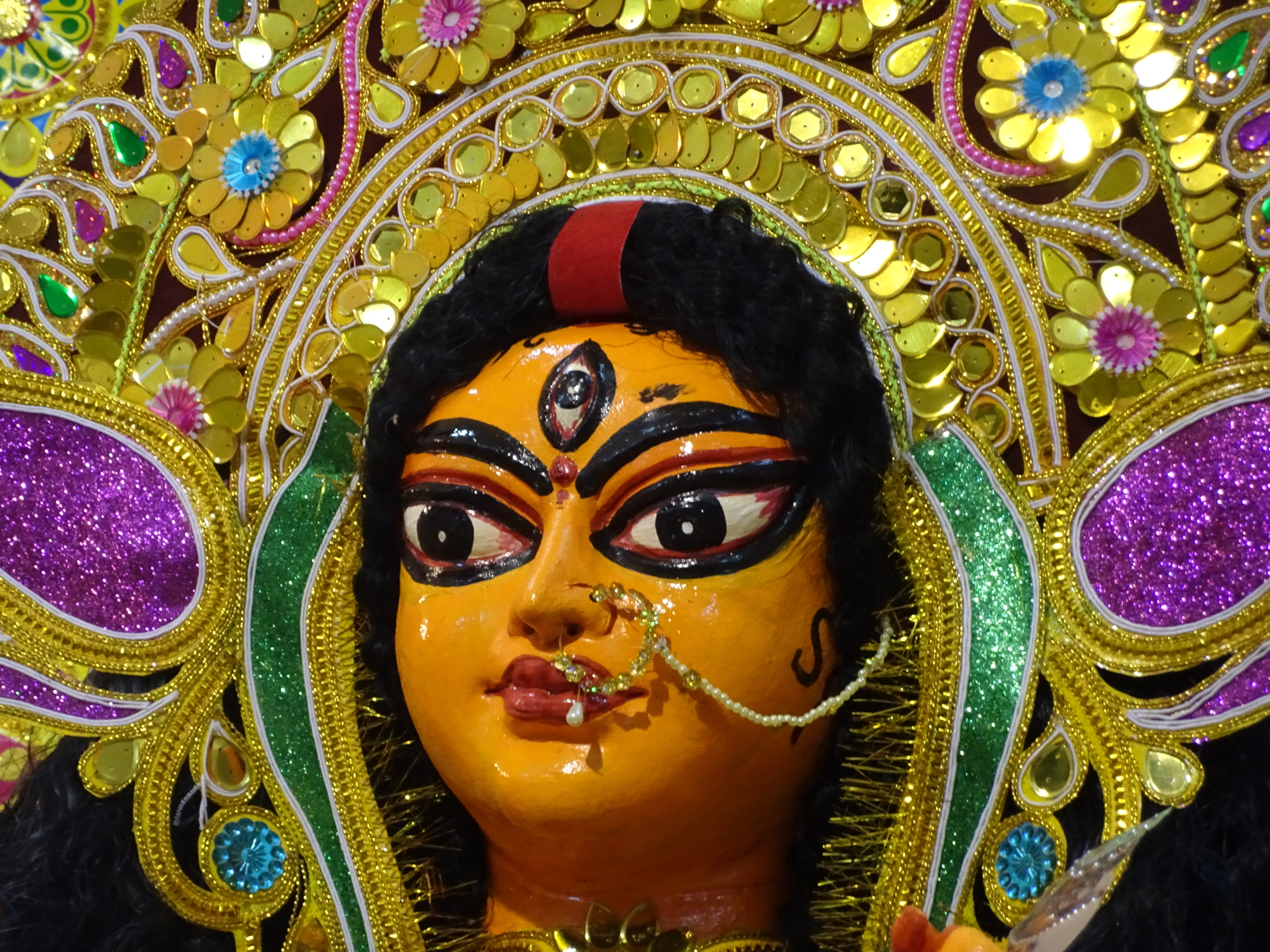
A second concept is that of LeelA, the myriad dynamic manifestations of the Devi. LeelA is playful expression of desires, the acting out of svAtantrya.
SvAtantrya and LeelA may be seen as seamless process concepts to describe the principle of sat-chit-ananda-iccha-jnana-kriya.
A third subsequent concept is a particular manifestation of LeelA as Manav Jati, with the desire to sustain and grow it. How is the Manav JAti to sustain and grow? As a response to this desire of the Devi Hindu ShAstrAs propound AshramAs of a life cycle of the human physical body, with grihasta AshramA being the central phase in a human life span. As we know, this has been spoken of in smritis and dharma sutrAs, constructed by Shastrajna’s based on empirical observations of different roles played by humans in different phases of their life cycle in the context of specific desh-kAla-paristhti.
I propose that we understand these concepts by viewing the human in a sharira-traya frame of sthula-sukshma-karana sharira.
SvAtantrya is the essence of freedom expressed by ShAkti and drives myriad manifestations reflecting playful desires of Shiva-Shakti. In the individual human, this Svantantrya principle manifests as AhamkArA. The desires of AhamkArA play out at as individuality at the level of Sukshma sharira through the Jnanendriyas. In turn, the desires of the AhamkArA are channeled as actions by the JanendriyAs through KarmendriyAs in every day interactions with other humans and the in the natural environment – with the intention of satisfying desires. The five tatwas, essences, that undergird SvAtantrya are chit-Ananda-iccha-jnana-kriya[ix].
Manifestation of SvAtantrya as human species on Earth: through the play of the Devi’s Iccha-Jnana-Kriya shaktis the five bhuaktika tatwas arise: earth-water-fire-air and sky. In parallel, arise jnanendriyas and karmendriyas. One such configuration of jnanendriyas and karmendriyas when it interact with the earth-water-fire-air-sky manifests as the human species. One of the Icchas of the human species so manifested is to sustain and grow itself. That leads to the play of grihasta AshramA, the householder.
The concept of grihasta AshramA has been central to procreation and sustenance of the physical body, the sthula sharira, of the human species. The sustenance of the sthula sharira of the human species is an expression of the playful desire of Shakti to enjoy the panch tan mAtrAs. While svatantrya concept promotes individuality in humans, the grihasta Ashrama concept promotes cooperation and collaboration, to enable sustenance and growth of the species.
With this background I begin my exploration of the current state of the institution of marriage which is a core human social construct within the Devi’s LeelA, play, of grihasta Ashrama.
The two concepts of SvatantryA and Grihasta AshramA may be seen to be orthogonal to each other. When an individual human is fully committed to grihasta AshramA, let’s say a 100, the svatantrya principle is at zero. When svantantrya is at 100, grihasta ashrama is at zero.
The role of marriage in grihasta ashrama being central, its form and unfolding in a social milieu will reflect the balance struck between the two principles. What drives such a balance between svatantra principle and the grihasta ashrama principle? I suggest it is a combination of the three sources of disturbances that humans experience as propounded in SAmkhyA: adibhauktika, adidaivika and adhyatmaka.
Adibhautika may be taken as socio-economic, often technology driven, and environmental flows in a society over which humans may have control over.
Adidaivika may be seen as great natural forces over which humans have no control over for example ice ages, many decades of droughts and consequent famines.
Adhyatmaka may be seen as the capacity to cognize and become aware of dynamic changes in adibhauktika and adidaivika. SAmkhya shows there is considerable scope of misapprehension of such experiences by humans. When such misapprehensions are multiplied over many humans, it results in sustained confusion. I suggest that this tendency towards confusion, arising due to limitations in the human cognitive process as described in SAmkhyA, leads to loss of capacity to strike a balance between svantantra and grihasta Ashrama principles, when such balance is disturbed from Adibhauktika and Adidaivika sources. Human groups then work towards bringing balance back. As marriage is a core engine of balanced human flourishing, success of the re-balancing process of the form and dynamic of marriage becomes one of the drivers for sustaining and growing human groups.
So now let’s look at applying these concepts to get a sense of current state of marriage in the USA and India. First here is some high level background:
The Respect for Marriage Act (RMA) of 2022 passed by the US Congress made civil unions among any two human individuals legal. This not only allows two individuals of opposite genders to enter into a civil union, even if that is not recognized or sanctified by one or more religions, it also enables same sex partners to enter into legal civil unions. In turn, such same sex couples can legally adopt and raise children, just as opposite sex couples can.
The RMA of 2022 also specifically made interracial marriages legal. Until 1960s, there were a number of states in USA that had laws declaring interracial marriages unlawful. The US Supreme Court ruled in 1967 that such state laws were unconstitutional. However, it was not until 2022 that US Congress positively recognized interracial marriages as legal.
The RMA also excludes civil unions among more than two individuals, thus declaring polygamous unions continue to be illegal.
In India, as listed earlier there are three major laws governing marriage (as listed earlier). Under one of them, Muslim Personal Law(1937), polygamous marriage is legal, marriage is contractual and between individuals of opposite sex. Divorce is relatively easy. Property division is according to contract entered into at time of marriage. The Hindu Marriage Act (1955) enables marriage of two individuals of opposite sex. Divorce is not easy. Property matters are subject to laws governing Hindu joint families. The Special Marriage Act (1954) enables two consenting adults of opposite sex to enter into marriage. Divorce is possible. Property division can be contentious in case of divorce. Inheritance laws under each of these acts differ, reflecting custom and history of the constituent community that is supported by each act.
The current conversation among younger generations in India seems to be around live-in relationships[x]. Hearings by the Indian Supreme Court about legality of same sex marriage has also made for headlines in India recently (May 2023)[xi]. The Court directed that the Union Ministry of Law and Justice to have its Law Commission to seek views and ideas from civil and religious groups to develop a Uniform Civil Code (as of June 14th 2023) for marriages, divorces, child custody, property division and inheritance.
So how to explain the apparent difference in trajectory of the institution of marriage in the USA and India using the conceptual tools I have identified above?
A perspective on current state of the institution of marriage in the USA
Of the three sources of change (Adibhauktika, Adidaivika and Adhyatmika), American socio-economic frame responds to the Adibhauktika the most (changes to human made material technology and social constructs). It secondarily focuses on changes in Adidaivika (large scale natural events such as hurricanes, floods, droughts, wild fires). Relatively, it focuses least on Adhyatmika (the self-aware cognitive process, which in humans is prone to mis-apprehension as SAmkhyA elegantly articulates). The technologies it has developed leads to enabling svantantrya, individuality / autonomy (and to remind ourselves, svantantrya in humans manifests as ahamkAra). As individuals are more able to sustain themselves with less cooperation and collaboration with other individuals, the need for households decreases. So if over all economic and health wellbeing of the individual is less dependent on group collaboration, then size of households is likely to decrease, including rise of single households. We see that happening in the USA. Along with this, as reproductive technology gains traction (freezing eggs and semen, in-vitro fertilization, surrogate pregnancies and more), the need for marriage may change and along with that its form. In other words, if the desire to sustain and grow the human species can be satisfied utilizing technologies that require less collaboration and cooperation, social constructs of households and marriages may change to adapt so that individuals can express their individuality more.
Recent US history supports such analysis. The combination of two factors stand out vis a vis the svAtantrya principle. One is women in the work force outside of the home beginning with industrialization and accelerating in late 1940s, after World War 2. The second is technology to manage reproductive process. As a combination of these two factors, the svAntantrya principle has acquired higher value in recent decades relative to previous socio-economic-technology epochs. In turn, it has promoted individuality, thus leading to challenge to structure of grihastashrama in general and marriage in particular. Thus single parent household, as well marriage of same sex partners, may be seen as a viable option to raise children.
A perspective on the current state of the institution of marriage in India
Of the three streams of marriage frames that currently flow in parallel in India (Hindu Marriages Act (1955), Special Marriages Act (1954) and Muslim Personal Law (1937), I have some familiarity of the Hindu Marriages Act.
The Hindu Marriages Act in India is based on traditional norms practiced by Hindus over many millennia, with some changes to suit the current paristhiti as perceived in mid-20th century: marriageable age for females was set at 16 (previously in many Hindu communities the practice was marriageable age for females to be at puberty, which could mean age as low as 9 in some cases). Another change was to uniformly enforce monogamy (previously some Hindu communities practiced males having two wives under certain circumstances). The inheritance laws of the unified Hindu joint family were carried forward, especially for example the male child’s mother and sisters having claim over inheritance along with the widow. Rules for division of property in case of divorce is also not clearly defined ,as divorce was assumed to be an exception than the rule.
The norms of Hindu marriage and accompanying grihastashrama (householder) roles in Hindu joint families were practiced by learning them through repetitive performance of specific rituals. As one illustrative example, the ritual of Gauri Puja (also called Hartalika in northern India) in Karnataka teaches how the wife goes to her mother’s house due to a tiff with her husband. The son is sent to persuade her to come back home, in the process showing great respect and admiration for his mother and the husband for his wife. The rituals are still performed, but the desh-kAl-paristhiti has changed. Such practices have now become more performative and less learning and action paradigms that may have been the original intention.
As the gusts of technology and finance driven globalization course through Indian socio-economic and cultural framework, one key outcome has been increase in sense of svAntantrya, especially economic freedom, among a fair number of Hindu women, especially in urban areas. Those gusts of globalization are Adibhauktika. They are to be expected. Resilience in the face of these gusts is to sharpen Adhyatmika, to go back to first principles and redesign norms in context of desh-kAl-paristhiti. Not through doubling down on norms designed and articulated in specific desh-kAl-paristhiti about 2500 years ago.
In my estimation, at present stage of my self-study and research, Hindu ShAstrAs have the capacity to not only explain the challenges that the frames of marriage and householder (grihastashrama) may be currently facing in India. They can also provide guidance on how to redesign these social frames so that they are more resilient to and enduring in the face of the current technological and financial forces that are at play. It opens up the possibility to do so in a transparent manner with critical thinking based on philosophical principles, that can involve youth in the conversations in collaborating in the redesign.
Edge Cases
Let’s take up some edge cases to test the explanatory power of the beginnings of the philosophical conceptual framework I am positing. For, it is the edge cases that challenge the mainstream core. When we recognize the edge cases as an integral part of Devi’s LeelA, then we can begin to gain an understanding of how the edge cases can co-exist with the mainstream core. The nucleus of a human cell is where all the action may take place within the cell. But its sustainability and capacity to multiply depends on how secure the cell borders are. For social constructs such as the institution of marriage, those borders, I posit, are the edge cases.
The edge cases I will very briefly take up here, in the context of the institution of marriage are: of widows, widowers, divorcees, single parents as well as individuals who do not fit neatly into the binary of male and female categories. For purposes of this already long post I will set up questions for each of these edge cases, which may open doors to further inquiry in subsequent writings.
Are widowers better able to form new households or expand their existing households as they have better income and asset potential in the USA? Are they better able to do so among Hindus due to inheritance laws and relatively higher social status? Conceptually, the economic leg up gives more svAtantrya, the play of ahamkara.
Do widows, especially relatively younger ones, face more challenges to sustain their household roles due to relatively lower income and asset levels in the USA (which may have improved in the last few decades)? Are inheritance laws and social status concerns a challenge to Hindu widows? As global technology and financial changes give Hindu women more capacity to act on their svantantrya, will they challenge current Hindu grihastAshrama, household and its core building block, marriage along with inheritance norms?
Similar questions can be raised for the divorcee edge case, for males and females. As Adibhauktika changes manifest as socio-economic theater, the scripts for various roles of the humans play in the LeelA of sustaining and growing a flourishing human species on Earth will change. Does the svAntantrya principle seem to have a feedback loop in the Adibhauktika theater manifestation – to enable more play? Is this something that manifests through roles of human females?
The edge case of single parent household begins to bring the question of whether and how human children can be nurtured to healthy flourishing adults outside of marriage. Can humans begin to cognize nurturing and raising children as a separate function from conceiving and birthing them? Can we consider emergence of a social organization (the notion of the state), with supporting technology and finance, driven by the human svatantrya impulse for individuality and autonomy as Adibhauktika? Perhaps whether the single parent household will grow depends upon whether the twin IcchA, the desires of the Devi, of individual svantantrya and of sustaining and growing human species on the other, are satisfied? If through social organization of technology and finance these twin desires are met, will it make marriage an optional way of conceiving, birthing and nurturing children to adulthood?
The questions raised in context of single parent household sets us up to inquire about the last edge case we will consider here. Can two individuals of same sex live together and nurture children to healthy flourishing adulthood? If so, would that be considered marriage?
The questions posed in the context of the edge cases require research and discussion. That in turn may lead to better understanding of how grihastashrama, households, and marriage as a core central institution may evolve with changes in Adibhauktika and Adidaivika.
My takeaways from this post
The twin Indic philosophical concepts of Svantantrya and LeelA may enable one to deconstruct the institution of marriage and household (grihastashrama) for the current desh-kAla-paristhiti in two different social milieus, USA and India. There may be potential to do so without having to depend solely on authority of what the practices and institutional designs were 2500 years ago when the desh-kAla-paristhiti were very different. That tells me that Hindu ShAstra concepts have the explanatory power that humans seek so that they can construct social organizations in consonance with Adibhauktika and Adidaivika. My sense is that such explanatory power arises due to concepts Hindu ShAstrAs being deeply rooted insights from AdhyAtmika perspective of Rishis.
So where do we go from here? I see opportunity for practical redesign conversations among Hindu constituents using concepts from the Hindu ShAstrAs so that, for example, the Hindu Marriages Act can be amended to reflect current desh-Kal-paristhiti while retaining the Adhyatmika guidance from our Rishis, without having to depend (especially as sole authority) on Adibhauktika designs from 2500 years ago tailored for those times and places. In other words, we may have an opportunity here, through extended tapas, to rejuvenate multiple intellectual springs from the deep and broad glacial wisdom of the Hindu ShAstrAs, so that the springs come down to the plains of desh-kAl-paristhiti to nourish us all.
[i] Video of the panel discussion has been made available here: https://www.vyoumtube.com/v/ma8XDvZHo8C
[ii] Dr Jayanti P. Sahoo is Associate Professor, Department of Philosophy, Janki Devi Memorial College, University of Delhi.
[iii] Dr Aparna Dhir-Khandelwal is Assistant Professor at the School of Indic Studies, Institute of Advanced Sciences, University of Massachusetts, Dartmouth.
[iv] Over the at least the last 2500 years or so human households (group of humans identifying as a family, with different roles to support each other is how I see households) provide the platform for us to play out our life cycle, from conception, birth, nurturing, adulthood and old age. They were and are a key to inter-generational human flourishing. Marriage was and is the core foundational block in such human households. Human groups across time and geography have come up with different ways of forming households. This is in turn reflected in different forms of marriage.
In the last hundred years or so, the emergence of the welfare state (consequent to emergence of the nation-state in Europe post the Enlightenment) in tandem with technology and financial organization, has offered a number of support functions that households provided in the past to the process of raising children to be healthy and flourishing adults. In turn, the form and function of households and marriage has undergone change.
[v] https://www.mtsu.edu/first-amendment/article/1040/morrill-anti-bigamy-act-of-1862#:~:text=Morrill%20Anti%2Dbigamy%20Act%20of%201862%20(1862)&text=%2C%20R%2DVt.-,The%20act%20was%20passed%20in%20response%20to%20the%20perceived%20threat,Saints%20(Mormons)%20in%20Utah.
[vi] https://historycooperative.org/the-history-of-divorce-law-in-the-usa/
[vii] https://www.npr.org/sections/thetwo-way/2015/06/26/417717613/supreme-court-rules-all-states-must-allow-same-sex-marriages “As the Supreme Court’s summary states, “The history of marriage is one of both continuity and change.”” “The ancient origins of marriage confirm its centrality, but it has not stood in isolation from developments in law and society,” Kennedy wrote. His opinion sketches a history of how ideas of marriage have evolved along with the changing roles and legal status of women.
Comparing that evolution to society’s views of gays and lesbians, Kennedy noted that for years, “a truthful declaration by same-sex couples of what was in their hearts had to remain unspoken.”
[viii] For cultural anthropology perspective, I would suggest David Graeber’s book, which questions mainstream western anthropology: https://www.amazon.com/Dawn-Everything-New-History-Humanity/dp/0374157359
[ix] Getting a working sense of these 5 tatwas is possible through upasana, being connected with the Devi, under the guidance of an AchAryA.
[x] https://mahabahu.com/live-in-relationships-gain-acceptance-in-india-a-cultural-shift/
[xi] https://indianexpress.com/article/explained/explained-law/sc-same-sex-marriage-here-are-the-arguments-over-10-days-8609177/

 21BanyanTree Life Coaching
You must be logged in to post a comment.