ॐ श्री मात्रे नमः (Photo by Soumik Dey on Unsplash)
By Jayant Kalawar, June 19th 2023
I was invited to participate in an online panel discussion on the institution of marriage in contemporary times that took place on April 17th 2023[i]. The panel discussion was moderated by Professors Dr Jayanti P. Sahoo[ii] and Dr. Aparna Dhir-Khandelwal[iii]. The moderators focused on how women’s roles have changed in contemporary times through their work in business, professions and academia. They contrasted these changing roles with an overall lack of change in roles in marriage, where women continue to shoulder disproportionate responsibility in carrying out child nurturing and household maintenance activities. If marriage is to be an equal partnership among spouses in what they contribute into the marriage, then it seems that modern women are getting the short end of the stick.
In this post I am exploring a big picture approach on how to think of the institution of marriage using selected principles from Hindu ShastrAs (from darshanas and agamas). I hope to inquire (this post is just a beginning) how such principles may help in understanding different frameworks for marriage that have emerged in different parts of the world, at different times over many millennia[iv].
I am making this exploration of how the explanatory power of concepts from Hindu ShastrAs can help us understand changes in core human social organization, household and marriage, that we are witnessing in recent times. I hope to describe what I see through the lens I am constructing. Not to prescribe, not to moralize. The aim is to open up thoughtful conversations on the practical matter of marriage as a social institution, using a lens constructed from Hindu ShAstrAs. Conversations which do not devolve rapidly into prescriptive sermonizing and hopefully instead open up more than one intellectual spring from the deep and broad glacial wisdom of Hindu ShAstrAs.
I am somewhat familiar with social and cultural flows in India and the USA. So the examples of a range of forms of marriage I present, in the course of my exploratory inquiry here, are from these two countries.
For example, in India there currently (in 2023) are three different recognized legal frameworks for marriage: Muslim Personal Law (1937), Special Marriage Act (1954) and Hindu Marriage Act (1955). The emergence of these three laws of marriage over the last hundred years reflects the reality of multiple streams of Indian cultural and social histories converging in the modern Indian nation-state. In March of 2023, the Supreme Court in India took up the matter of whether marriage between individuals of same sex would be legal under the Special Marriage Act. This may be seen as a reflection of the currents of globalization crisscrossing India. Much of such currents emerge from the USA at the present time.
In the USA, institution of marriage has been contested in different ways. In the mid-19th century there was a contest between monogamy and polygamy when Utah was incorporated into the United States, with monogamy, as a result, becoming the established law across all states[v]. In the late 19th and early 20th century, social and legal status of women in USA changed, giving women property rights, followed by political rights of voting. In the mid to late 20th century opportunities opened up for women to work outside of home, to earn independent incomes, especially post World War II. Through these steps women gained autonomy, which then reflected in changes in the form of the monogamous marriage. Divorce laws emerged in different states, along with child custody and community property related legislations[vi]. Marriage in practice became dependent on continuing agreement between two adults of opposite sex to co-habit, have and nurture children. Marriage thus became subject to continued agreement between the two adults and resulted in no-fault divorce legislations emerging in the late 1960s and early 1970s. In late 20th to early 21st century question began being raised whether two individuals same sex can get married. Same-sex marriage was ruled to be legal in 2015 by the US Supreme Court.[vii]
So what drives different human communities to develop different norms for the institution of marriage at different times? I am not presenting a ground up cultural anthropology perspective[viii]. I am presenting a top down first principles based perspective from within Hindu ShAstrAs. My hope is to re-discover explanatory power of Hindu ShAstrAs to address seemingly complex questions that humans face, such as how the institution of marriage undergoes change depending on desh-kAl-paristhiti.
Here are a few concepts from my understanding of Hindu SHAstrAs that I will bring into play in this initial exploration into the institution of marriage.
One is the concept of svAtantrya, freedom, autonomy, as articulated in the PratibhijnA branch of Advaita by AchArya UtpaladevA, Somananda and Abhinavagupta in the 10th and 11th century CE. This is a shruti concept articulated by rishis.
A second concept is that of LeelA, the myriad dynamic manifestations of the Devi. LeelA is playful expression of desires, the acting out of svAtantrya.
SvAtantrya and LeelA may be seen as seamless process concepts to describe the principle of sat-chit-ananda-iccha-jnana-kriya.
A third subsequent concept is a particular manifestation of LeelA as Manav Jati, with the desire to sustain and grow it. How is the Manav JAti to sustain and grow? As a response to this desire of the Devi Hindu ShAstrAs propound AshramAs of a life cycle of the human physical body, with grihasta AshramA being the central phase in a human life span. As we know, this has been spoken of in smritis and dharma sutrAs, constructed by Shastrajna’s based on empirical observations of different roles played by humans in different phases of their life cycle in the context of specific desh-kAla-paristhti.
I propose that we understand these concepts by viewing the human in a sharira-traya frame of sthula-sukshma-karana sharira.
SvAtantrya is the essence of freedom expressed by ShAkti and drives myriad manifestations reflecting playful desires of Shiva-Shakti. In the individual human, this Svantantrya principle manifests as AhamkArA. The desires of AhamkArA play out at as individuality at the level of Sukshma sharira through the Jnanendriyas. In turn, the desires of the AhamkArA are channeled as actions by the JanendriyAs through KarmendriyAs in every day interactions with other humans and the in the natural environment – with the intention of satisfying desires. The five tatwas, essences, that undergird SvAtantrya are chit-Ananda-iccha-jnana-kriya[ix].
Manifestation of SvAtantrya as human species on Earth: through the play of the Devi’s Iccha-Jnana-Kriya shaktis the five bhuaktika tatwas arise: earth-water-fire-air and sky. In parallel, arise jnanendriyas and karmendriyas. One such configuration of jnanendriyas and karmendriyas when it interact with the earth-water-fire-air-sky manifests as the human species. One of the Icchas of the human species so manifested is to sustain and grow itself. That leads to the play of grihasta AshramA, the householder.
The concept of grihasta AshramA has been central to procreation and sustenance of the physical body, the sthula sharira, of the human species. The sustenance of the sthula sharira of the human species is an expression of the playful desire of Shakti to enjoy the panch tan mAtrAs. While svatantrya concept promotes individuality in humans, the grihasta Ashrama concept promotes cooperation and collaboration, to enable sustenance and growth of the species.
With this background I begin my exploration of the current state of the institution of marriage which is a core human social construct within the Devi’s LeelA, play, of grihasta Ashrama.
The two concepts of SvatantryA and Grihasta AshramA may be seen to be orthogonal to each other. When an individual human is fully committed to grihasta AshramA, let’s say a 100, the svatantrya principle is at zero. When svantantrya is at 100, grihasta ashrama is at zero.
The role of marriage in grihasta ashrama being central, its form and unfolding in a social milieu will reflect the balance struck between the two principles. What drives such a balance between svatantra principle and the grihasta ashrama principle? I suggest it is a combination of the three sources of disturbances that humans experience as propounded in SAmkhyA: adibhauktika, adidaivika and adhyatmaka.
Adibhautika may be taken as socio-economic, often technology driven, and environmental flows in a society over which humans may have control over.
Adidaivika may be seen as great natural forces over which humans have no control over for example ice ages, many decades of droughts and consequent famines.
Adhyatmaka may be seen as the capacity to cognize and become aware of dynamic changes in adibhauktika and adidaivika. SAmkhya shows there is considerable scope of misapprehension of such experiences by humans. When such misapprehensions are multiplied over many humans, it results in sustained confusion. I suggest that this tendency towards confusion, arising due to limitations in the human cognitive process as described in SAmkhyA, leads to loss of capacity to strike a balance between svantantra and grihasta Ashrama principles, when such balance is disturbed from Adibhauktika and Adidaivika sources. Human groups then work towards bringing balance back. As marriage is a core engine of balanced human flourishing, success of the re-balancing process of the form and dynamic of marriage becomes one of the drivers for sustaining and growing human groups.
So now let’s look at applying these concepts to get a sense of current state of marriage in the USA and India. First here is some high level background:
The Respect for Marriage Act (RMA) of 2022 passed by the US Congress made civil unions among any two human individuals legal. This not only allows two individuals of opposite genders to enter into a civil union, even if that is not recognized or sanctified by one or more religions, it also enables same sex partners to enter into legal civil unions. In turn, such same sex couples can legally adopt and raise children, just as opposite sex couples can.
The RMA of 2022 also specifically made interracial marriages legal. Until 1960s, there were a number of states in USA that had laws declaring interracial marriages unlawful. The US Supreme Court ruled in 1967 that such state laws were unconstitutional. However, it was not until 2022 that US Congress positively recognized interracial marriages as legal.
The RMA also excludes civil unions among more than two individuals, thus declaring polygamous unions continue to be illegal.
In India, as listed earlier there are three major laws governing marriage (as listed earlier). Under one of them, Muslim Personal Law(1937), polygamous marriage is legal, marriage is contractual and between individuals of opposite sex. Divorce is relatively easy. Property division is according to contract entered into at time of marriage. The Hindu Marriage Act (1955) enables marriage of two individuals of opposite sex. Divorce is not easy. Property matters are subject to laws governing Hindu joint families. The Special Marriage Act (1954) enables two consenting adults of opposite sex to enter into marriage. Divorce is possible. Property division can be contentious in case of divorce. Inheritance laws under each of these acts differ, reflecting custom and history of the constituent community that is supported by each act.
The current conversation among younger generations in India seems to be around live-in relationships[x]. Hearings by the Indian Supreme Court about legality of same sex marriage has also made for headlines in India recently (May 2023)[xi]. The Court directed that the Union Ministry of Law and Justice to have its Law Commission to seek views and ideas from civil and religious groups to develop a Uniform Civil Code (as of June 14th 2023) for marriages, divorces, child custody, property division and inheritance.
So how to explain the apparent difference in trajectory of the institution of marriage in the USA and India using the conceptual tools I have identified above?
Of the three sources of change (Adibhauktika, Adidaivika and Adhyatmika), American socio-economic frame responds to the Adibhauktika the most (changes to human made material technology and social constructs). It secondarily focuses on changes in Adidaivika (large scale natural events such as hurricanes, floods, droughts, wild fires). Relatively, it focuses least on Adhyatmika (the self-aware cognitive process, which in humans is prone to mis-apprehension as SAmkhyA elegantly articulates). The technologies it has developed leads to enabling svantantrya, individuality / autonomy (and to remind ourselves, svantantrya in humans manifests as ahamkAra). As individuals are more able to sustain themselves with less cooperation and collaboration with other individuals, the need for households decreases. So if over all economic and health wellbeing of the individual is less dependent on group collaboration, then size of households is likely to decrease, including rise of single households. We see that happening in the USA. Along with this, as reproductive technology gains traction (freezing eggs and semen, in-vitro fertilization, surrogate pregnancies and more), the need for marriage may change and along with that its form. In other words, if the desire to sustain and grow the human species can be satisfied utilizing technologies that require less collaboration and cooperation, social constructs of households and marriages may change to adapt so that individuals can express their individuality more.
Recent US history supports such analysis. The combination of two factors stand out vis a vis the svAtantrya principle. One is women in the work force outside of the home beginning with industrialization and accelerating in late 1940s, after World War 2. The second is technology to manage reproductive process. As a combination of these two factors, the svAntantrya principle has acquired higher value in recent decades relative to previous socio-economic-technology epochs. In turn, it has promoted individuality, thus leading to challenge to structure of grihastashrama in general and marriage in particular. Thus single parent household, as well marriage of same sex partners, may be seen as a viable option to raise children.
Of the three streams of marriage frames that currently flow in parallel in India (Hindu Marriages Act (1955), Special Marriages Act (1954) and Muslim Personal Law (1937), I have some familiarity of the Hindu Marriages Act.
The Hindu Marriages Act in India is based on traditional norms practiced by Hindus over many millennia, with some changes to suit the current paristhiti as perceived in mid-20th century: marriageable age for females was set at 16 (previously in many Hindu communities the practice was marriageable age for females to be at puberty, which could mean age as low as 9 in some cases). Another change was to uniformly enforce monogamy (previously some Hindu communities practiced males having two wives under certain circumstances). The inheritance laws of the unified Hindu joint family were carried forward, especially for example the male child’s mother and sisters having claim over inheritance along with the widow. Rules for division of property in case of divorce is also not clearly defined ,as divorce was assumed to be an exception than the rule.
The norms of Hindu marriage and accompanying grihastashrama (householder) roles in Hindu joint families were practiced by learning them through repetitive performance of specific rituals. As one illustrative example, the ritual of Gauri Puja (also called Hartalika in northern India) in Karnataka teaches how the wife goes to her mother’s house due to a tiff with her husband. The son is sent to persuade her to come back home, in the process showing great respect and admiration for his mother and the husband for his wife. The rituals are still performed, but the desh-kAl-paristhiti has changed. Such practices have now become more performative and less learning and action paradigms that may have been the original intention.
As the gusts of technology and finance driven globalization course through Indian socio-economic and cultural framework, one key outcome has been increase in sense of svAntantrya, especially economic freedom, among a fair number of Hindu women, especially in urban areas. Those gusts of globalization are Adibhauktika. They are to be expected. Resilience in the face of these gusts is to sharpen Adhyatmika, to go back to first principles and redesign norms in context of desh-kAl-paristhiti. Not through doubling down on norms designed and articulated in specific desh-kAl-paristhiti about 2500 years ago.
In my estimation, at present stage of my self-study and research, Hindu ShAstrAs have the capacity to not only explain the challenges that the frames of marriage and householder (grihastashrama) may be currently facing in India. They can also provide guidance on how to redesign these social frames so that they are more resilient to and enduring in the face of the current technological and financial forces that are at play. It opens up the possibility to do so in a transparent manner with critical thinking based on philosophical principles, that can involve youth in the conversations in collaborating in the redesign.
Let’s take up some edge cases to test the explanatory power of the beginnings of the philosophical conceptual framework I am positing. For, it is the edge cases that challenge the mainstream core. When we recognize the edge cases as an integral part of Devi’s LeelA, then we can begin to gain an understanding of how the edge cases can co-exist with the mainstream core. The nucleus of a human cell is where all the action may take place within the cell. But its sustainability and capacity to multiply depends on how secure the cell borders are. For social constructs such as the institution of marriage, those borders, I posit, are the edge cases.
The edge cases I will very briefly take up here, in the context of the institution of marriage are: of widows, widowers, divorcees, single parents as well as individuals who do not fit neatly into the binary of male and female categories. For purposes of this already long post I will set up questions for each of these edge cases, which may open doors to further inquiry in subsequent writings.
Are widowers better able to form new households or expand their existing households as they have better income and asset potential in the USA? Are they better able to do so among Hindus due to inheritance laws and relatively higher social status? Conceptually, the economic leg up gives more svAtantrya, the play of ahamkara.
Do widows, especially relatively younger ones, face more challenges to sustain their household roles due to relatively lower income and asset levels in the USA (which may have improved in the last few decades)? Are inheritance laws and social status concerns a challenge to Hindu widows? As global technology and financial changes give Hindu women more capacity to act on their svantantrya, will they challenge current Hindu grihastAshrama, household and its core building block, marriage along with inheritance norms?
Similar questions can be raised for the divorcee edge case, for males and females. As Adibhauktika changes manifest as socio-economic theater, the scripts for various roles of the humans play in the LeelA of sustaining and growing a flourishing human species on Earth will change. Does the svAntantrya principle seem to have a feedback loop in the Adibhauktika theater manifestation – to enable more play? Is this something that manifests through roles of human females?
The edge case of single parent household begins to bring the question of whether and how human children can be nurtured to healthy flourishing adults outside of marriage. Can humans begin to cognize nurturing and raising children as a separate function from conceiving and birthing them? Can we consider emergence of a social organization (the notion of the state), with supporting technology and finance, driven by the human svatantrya impulse for individuality and autonomy as Adibhauktika? Perhaps whether the single parent household will grow depends upon whether the twin IcchA, the desires of the Devi, of individual svantantrya and of sustaining and growing human species on the other, are satisfied? If through social organization of technology and finance these twin desires are met, will it make marriage an optional way of conceiving, birthing and nurturing children to adulthood?
The questions raised in context of single parent household sets us up to inquire about the last edge case we will consider here. Can two individuals of same sex live together and nurture children to healthy flourishing adulthood? If so, would that be considered marriage?
The questions posed in the context of the edge cases require research and discussion. That in turn may lead to better understanding of how grihastashrama, households, and marriage as a core central institution may evolve with changes in Adibhauktika and Adidaivika.
The twin Indic philosophical concepts of Svantantrya and LeelA may enable one to deconstruct the institution of marriage and household (grihastashrama) for the current desh-kAla-paristhiti in two different social milieus, USA and India. There may be potential to do so without having to depend solely on authority of what the practices and institutional designs were 2500 years ago when the desh-kAla-paristhiti were very different. That tells me that Hindu ShAstra concepts have the explanatory power that humans seek so that they can construct social organizations in consonance with Adibhauktika and Adidaivika. My sense is that such explanatory power arises due to concepts Hindu ShAstrAs being deeply rooted insights from AdhyAtmika perspective of Rishis.
So where do we go from here? I see opportunity for practical redesign conversations among Hindu constituents using concepts from the Hindu ShAstrAs so that, for example, the Hindu Marriages Act can be amended to reflect current desh-Kal-paristhiti while retaining the Adhyatmika guidance from our Rishis, without having to depend (especially as sole authority) on Adibhauktika designs from 2500 years ago tailored for those times and places. In other words, we may have an opportunity here, through extended tapas, to rejuvenate multiple intellectual springs from the deep and broad glacial wisdom of the Hindu ShAstrAs, so that the springs come down to the plains of desh-kAl-paristhiti to nourish us all.
[iv] Over the at least the last 2500 years or so human households (group of humans identifying as a family, with different roles to support each other is how I see households) provide the platform for us to play out our life cycle, from conception, birth, nurturing, adulthood and old age. They were and are a key to inter-generational human flourishing. Marriage was and is the core foundational block in such human households. Human groups across time and geography have come up with different ways of forming households. This is in turn reflected in different forms of marriage.
In the last hundred years or so, the emergence of the welfare state (consequent to emergence of the nation-state in Europe post the Enlightenment) in tandem with technology and financial organization, has offered a number of support functions that households provided in the past to the process of raising children to be healthy and flourishing adults. In turn, the form and function of households and marriage has undergone change.
Comparing that evolution to society’s views of gays and lesbians, Kennedy noted that for years, “a truthful declaration by same-sex couples of what was in their hearts had to remain unspoken.”
Sri GaNeshA MokshadAyakA, ChinmayA VrindAvan, Carnbury, New Jersey
By Jayant Kalawar, February 8th 2023, Sankashti Chaturthi
When I shared my previous post on rahasya of mUrtis, a friend asked how different DevatAs emerge, which then manifest – to us – as mUrtis, as well? What is the foundation of such process of emergence? I do not claim to have definitive answer to the question. I am offering my explorations on this topic.
Here I describe my explorations through example of one particular DevatA, Sri GaNeshA. I chant AtharvashirshA[i] daily, and numerous times on SankashTi Chaturthi (Chatur, the fourth, tithi, period during which the Moon is seen to travel 12 degrees away from the Sun, after PurNimA, the full Moon). That has given me some glimmer of an insight on the emergence of Sri GaNeshA through profound insights of the Rishi of AtharvashirshA.
Foundations
First, let me share with you my understanding, limited as it is, of the foundation of the process of emergence of DevatAs in Humans. Movement, expression, vAk, is considered an integral aspect of ShivA. ShivA’s nature is Chit, the potential to be aware, and Anand, the capacity to be without action, and with unlimited potential for action. That potential, when expressed, is vAk. ShivA as vAk is often given the name Devi. Devi is ShivA. ShivA is Devi. AchAryAs in the past have used the metaphor of the Ocean and the waves in the Ocean cannot be separated, they are congruent. ShivA and Devi cannot be separated. Devi’s nature is expression, movement, ucchAraNA through icchA – jnAna – kriyA. And, to repeat, ShivA’s nature is Chit-Ananda. The integral nature of ShivA and Devi is chit-Ananda-icchA-jnAna-kriyA.
The root of the word Devi (देवी)is considered to be div (दिव्). The interpretations of the noun Devi from the root div gives us the following ways to make sense (make it meaningful) and useful for us in our manifest world[ii]: to sport with the creative delight in Her capacity to manifest and be aware of Her myriad manifestations; the desire to overcome and surpass the stillness; to carry on the activities of life through knowledge, doubts, ascertainment (jnAnA); shining; the one who is adored; one who has access to all aspects across space and time. In summary, the VyAkaraNa based mimAmsA (interpretation) of Devi is: ‘sport, the desire to overcome or surpass all, all acts in day to day life, shining, adoration and movement’.
Notice that we, as humans, experience all these attributes in ourselves, even though to limited extent. The limitation is in our capacity to be self-aware. Especially, our capacity to become aware of our own reflection is constrained. When we do cognize our reflection, we are in a state of vismarA (forgetfulness). The human manifestation forgets that what we notice as ‘outside’ of us is a reflection of ourselves. And the we erroneously consider that reflection, space-time apparently populated with dynamic objects, as fundamental reality. The error of considering space-time as fundamental reality then leads us to being materialists, which constrains our ability to understand our own nature.
Humans manifest in the Devi’s space-time spandanA. Given our limitations, how can we cognize the Devi’s presence? One way to do so is through the MatrikAs, the 50 discrete spandanA, experienced as sounds, that the human sthula sharira is able to cognize[iii]. These specific discrete sounds are represented (there is more than one tradition on how many letters there are in the Sanskrit alphabet, this particular set of 50 letters is based on my learnings so far) in the 50 letters of the Sanskrit alphabet, with 16 avyaya (vowels) and 34 vyanjana (consonants).
The vyanjana are specific to location in the sthula sharira. The vyanjana ka, example, corresponds to the mooldhAra[iv]. The vyanjana ga also corresponds to the mooldhAra. The avayAs connect the vyanjans. This will suffice for now to go back to the purpose of this note, which is to begin to speak of the emergence of the devatA, Sri GaNapati (Sri being an indicator of the Devi; what follows Sri is recognized as being Her aumsha).
Emergence of Sri GaNapati: An interpretation of AtharvashirshA
Atharvashirsha has a total of 10 verses (and an additional 4 verses of phala shruti). The first verse is the Upanishat verse, which affirms that Sri GaNapati is integral to and one and the same as Brahman. The next 5 verses describe Sri GaNapati’s tatva Swaroopa, both in the sthula and sukshma form. The 7th verse describes the Swaroopa, the form, of the Sri GaNapati MantrA. The 8th verse is the Sri GaNapati Gayatri, which provides the meditative chant to begin manifesting the MUrti roopa. In the 8th verse describes the result of the Rishis’s prolonged tapasyA on Sri GaNapati Gayatri: the key features of the MUrti of Sri GaNapati.
The Atharvashirsha is a powerful step by step guide to pratyksha pramANa, the sAkshAtkAra, of Sri GaNapati. It is not amenable to dry discourse of logical deconstruction of text.
The Rishi of Atharvashirsha focused on the MAtrikA Ga ( ग ), one of the 34 vyanjanAs.
The sound Ga is actuated by the mAnav sthula sharira by the middle of the tongue pressing on the back portion of the upper palate, resulting in a tug to the bottom of the spinal cord. The Rishi points out that Ga is always in the MUlAdhAra ( tvam mUlAdhArsya SthitOsinityam) of our sukshma sharira, which to our lay minds is at the bottom of the spinal cord of our sthula sharira.
The mantra, Ga-Na-pa-ta-yayI na-ma-hA, is composed to enable, when chanted with visualization of movement, to move prANA from the mUldhAra up to the sahasrAra. Ga initiates the prANA movement in the mUldhAra. Na-pa-ta begins the movement towards maNipurA. The avayaya yayI gives power filled boost for movement all the way to shasrAra. The Na engages with sahasrAra. The ma-ha immerses and sublimates in the sahsrAra, initiating the blissful downward flow of blessings of Shiva-Shakti from the sahasrAra bathing the entire sukshma and sthula sharira with a sense of peace and contentment. The cycle begins anew.
An Outline of a Cognitive Framework for DevatA emergence
Above I have illustrated the DevatA emergence process through an example. Here I offer a brief high level outline of a cognitive framework that supports the process. This may help as a starting point helps us explore the rahasya a little more.
The outline of the cognitive framework: parA-pashyanti-madhyamA-vaikhari.
Most of us function in the madhyamA (analytic mind producing models of the world based on data delivered by sense functions) – vaikhari (expressions and capture of dynamic objects in the Devi’s space-time spandanA). Most of us are in amnesia that the apparent externality of vaikhari is a reflection of our self as ShivA.
The Rishi has been able to move out of the madhyamA-vaikhari loop, into pashyanti (a mode which enables partial glimpses of Devi’s expressions) of parA, the expression of the Devi. Partial glimpses, because in the human manifestation, even those in the pashyanti mode can cognize and make sense only within the constraints of madhyamA-vaikhari. To cognize something, is remembering. And remembering implies prior experience. The Rishi has previously experienced Ga sound and has been able to reproduce it using indriyas in the sukshma (corresponding to madhyamA)-sthula (corresponding to vaikhari) sharira. It is this remembering that leads to re-cognition of the Ga received in the pashyanti mode. Articulation of this re-cognition in pashyanti to the madhyamA-vaikari level results in Atharvashirsha. That capacity to articulate, connect from the pashyanti to the madhyamA-vaikhari, to generate Atharvashirsha, comes about due Devi’s AnugrahA, inexplicable to most humans.
Disclaimer
In the current desh-kAl-paristhiti, with internet being an integral dimension of human space-time (with Artificial Intelligence software currently (in early 2023) rapidly emerging as a major content producer and shaper of narratives for human societies – playing a potentially dominant role in the madhyamA-vaikhari loop), it is important to note that none of what has been said in this post should be used as guideline for personal practice, sAdhanA. The purpose of this article is to encourage readers to dive deeper into the rahasya of DevatA emergence. It is neccessary that guidelines for sadhanA be acquired individually from a seasoned UpAsakA. Each individual is differently configured and in different stages of life cycle requires guidance in different types of sAdhanA. There are no cookie-cutter solutions, to use a much used phrase.
[ii] Pp 10-11 Abhinavgupta, ParA-TrIshikA-VivaraNA, English translation with running notes by Jaideva Singh, Sanskrit text corrected, notes on technical points and charts dictated by Swami LaksmaNjee, Edited by Bettina Baumer, 2011, Motilal Banarasidass Publishers Private Limited.
[iii] What I describe here is based on my shravaNa (listening and reading highly accomplished upAsakAs, who are immersed in the Devi e.g. Sri RAmakrishNa Paramhamsa) and manana, followed by nidhidhyAsa (daily contemplative immersion). For those interested in more academic treatment of this topic, this reference may be a starting point: Judit Törzsök, hThe alphabet goddess Mātṛkā in some early śaiva Tantras, accessed at (on February 1st 2023) https://hal.science/hal-00710939/document
[iv] There are different sounds associated with chakrAs corresponding to each of the shariras and connections between them. For example, the sounds associated with chakrAs at the Sthula sharira level are: LaṀ for mUldhArA, VaṀ for svAdhithAna, RaṀ for MaNipurA, YaṀ for AnAhatA, HaṀ for Vishuddhi, AuṀ for AjnA. Chanting and meditation with these sounds focused on the chakrA locations are to enable shuddhi of the sthula sharira, which then enables the sAdhakA to focus on sukshma sharira. The kA and Ga as bijA for MUldhAra enable connection from the kAraNa sharira to the sukshma sharira.
In this post I am extending my thoughts from my last post on role of VyAkaraNA in our cognitive process . I want to explore how our ancestors embedded their insights into mUrtis and the role that plays in our upAsanA (the sitting in contemplation next to the Divya Shaktis). The mUrtis embed a subtle language to provide a reflection (pratibimba) of the self. What I offer here is my mimAmsA (interpretation) through a few examples.
As I have been chanting the Sri LalitA SahasranAma almost daily over more than a decade, I have noticed that some of the names spring up spontaneously as I go about on my long daily walk or during mundane chores like washing dishes or doing the laundry. Not only do the nAmAs arise as sound, they emerge as a visualization of the imagery being described. There is a contemplation, a soft churning in the mind, that seems to happen. And sometimes a small insight may emerge. Let me give you an example.
Consider the 17th nAmA of Sri LalitA: ashTami chandra vibhrAja daLika sthala shobhitA. Most of the thousand names, indeed thousand mantrAs, seem tongue twisting to start with. Chanting them with the rhythm of the anushThuba chandA helps us perform ucchAraNa to bring out the sounds – and the flower of the seed mantra begins to blossom. As I do SravaNa of the mantrA, manana follows. ashTami reminds me of the tithi on which we celebrate rising of Sri DurgA Devi during NavarAtri. I imagine looking up in the night sky on ashtami and visualizing a clear bright chandra, slightly greater than half. The mantrA helps me visualize that part of the sky as the Devi’s forehead. With just a slight cognitive shift, I visualize the mantrA’s message that space (the brilliantly lit forehead in the sky) and time (ashTami tithi) is one aspect of the Devi’s myriad spandanA. As that visualization arises, I stop breathing for a few moments. Stopping of the prANic connection, even momentarily, has the potential, when spurred by the mantra, of dissolving one into the ephemeral, beyond space-time.
This one mantra, describing the forehead of the Devi’s Murti, has the power to raise one to ephemeral heights!
The Four Hands, Chatur Bahu, of the Devi’s MUrti
Now let’s consider a more sanguine set of mantrAs, which describe another aspect of Sri LalitA Devi’s Murti: nAmAs 7 to 11.
The 7th nAma describes Sri LalitAmbA’s mUrti as one having four arms, chatur bAhu samanvitA. And then 8th to 11th go on to describe what each of the four arms hold.
In the lower left arm, the Devi Murti holds the noose. In the lower right arm, the goad. The upper right arm holds five long stemmed flowers described as arrows and the upper left arm holds a sugarcane stalk. Next time you contemplate Sri LalitAmbA’s MUrti notice the four arms and what they are holding. Our ancestors designed MUrtis meticulously embedding them with compressed insights.
It is an entire epic manifesting before you. Sri LalitA SahasranAma holds the keys to the treasure of knowledge embedded in the mUrti of Sri LalitAmbA.
The 8th nAmA, rAga-swarupa-pAshADyA, describes the noose in the lower left hand. The shape (swarupa) of the noose (pAshADyA) stands for hungry desire (rAgA) to consume. The hungry desire to consume material objects. Such desire becomes a noose around our neck. It is as if we are on a leash and the hungry desire leads us to consume mindlessly. Sri LalitAmbA’s mUrti is designed to enable introspection, as a reflection of ourselves (pratibimbA).
The 9th nAmA, krodha-AkArA-kushojjvalA, describes the elephant goad in the lower right hand. As a pratibimba of ourselves, the goad (kushojjvalA) is the drive that is made of AkArA (knowledge arising in forms, shapes in space-time) and passion (krodha). Thus, the desire (rAga, a form of IcchA shakti, the kAraNA) transforms into AkArA in space-time (a sukshma manifestation) and results in action in the sthula, through the channel of passion (krodha). As we know, each word in Sanskrit can be and has been interpreted differently (the MimamsA-TarkA process). Here I am using the pratibimba paradigm (a reflection of ourselves), while at the same time staying true to the Shruti: the Devi is IcchA shakti – JnAna shakti – KriyA shakti swaroopiNi (658th nAmA in the Sri LalitA SahasranAma).
The 10th nAmA, mano-rupekshu-kodandA, describes the sugarcane stalk in the upper right hand. The kodanda (bow, sugarcane stalk) indicates the potential to manifest the shapes, forms (rupa) in the mind (mana). The shapes, forms in space-time which are referred to as AkArA are acquired by this potential of kodanda to become rupa in the mind. The cognitive process of acquiring the object and transforming into nAma-rupa is represented by the upper right hand of the mUrti.
The 11th nAmA, panch-tan-mAtra-sAyakA, described the 5 arrows of flowers in the upper left hand. The five arrows represent the five senses, which are deployed to go out and acquire the AkArA, the object, to the manas, to transform it into rupa with an associated nAma. Through such nAma-rupa association, meanings begin to be created.
Thus, the four hands of the Devi’s mUrti are designed to reflect back to the upAsakA (the one who sits at the mUrti’s feet in contemplation), the upAsakA’s own nature. The Lalita SahasranAm is a guide to the upAsakA as she / he visualizes Sri Lalita’S mUrti within themselves and begins to become aware how the Devi’s shakti is manifesting within them.
In that sense LalitAmbA’s mUrti is a yantra, an artifact, embedded with language designed to help us contemplate and understand our cognitive processes as spandanA and how the mAnav spandanA is one of the myriad spandanA of the Devi. As I have shown here through a few examples, guides to open up the mystery, the rahasyA, of each mUrti, are accessible through sravaNa and manana of the corresponding sahasranAmAs[i].
[i] Those, among readers of this article, who wish to research more I would suggest LalitA-SahasranAmA with BhAskararAyA’s Commentary, English Translation (Translated by R. AnanthkrishNa Sastry), The Adyar Library and Research Center, Chennai, 600020, India, 2010. While it is titled as Commentary, it may be more appropriately described as a meticulous compilation of multiple interpretations of each nAmA by many mimamsakAs over millennia. It is a treasure trove of contemplation for upAsakAs.
This note begins with how I think the sense of time arises in the human mind. I explore how it may have been different in the past in India by describing how time was measured in different ways. I then describe how sense of time changed in the 16th century, which led to massive changes across the globe. I begin by describing how the sense of time may be changing in the 21st century and how it may be negatively impacting human well-being.
Many of us are on social media every day. We notice changes of the view in our account with new entries, whether on Twitter, Instagram or Facebook. Each such change comes with a time stamp. We may not read the time stamp. But we register that the state has changed. What we are viewing on social media is a customized slice of data in massive data bases stored as bytes (of eight bits each). The state of bytes keep changing in fractions of seconds on such massive data bases. Socially we are now living in space where collectively we make changes to the state (of the data bases) at speeds which individual human minds cannot comprehend.
This lack of being able to comprehend rapid change of state (too much information?) seems to result in individuals not being able to make sense of the world they live in. Collectively it may lead humans to not being able to have a shared narrative to act out what may be a meaningful theater of life that gives a sense of human flourishing to most, if not all humans.
The breakdown in capacity to produce shared narratives may be based in humans not being able to be in rhythm with the accelerated speed of social time in the 21st century.
It may be helpful to start with a caveat that what I say is highly speculative, based on very limited information. And that limit is within the highly limited capacity of humans to know the Cosmos, most of which is beyond access to the 5 ways of sensing that the human species is endowed with.
I am presenting Rta as a different way of sensing time. It is a different way of sensing time, than the one we are used to in the 21st century. In the 21st century we sense time in terms of social contracts we have entered into. A contract to work, to attend school, to see a patient, get a haircut. These are all social contracts among humans. Time is sensed in terms of change of state of contracts among humans. If the work contract on an assembly line requires production of 3 widgets per muinute, time is sensed in terms of whether the contract was met or not.
This way of sensing time became the norm post this so-called European Enlightenment, when modern Humans became the de facto center of the Cosmos. Individual and group desires of modern Humans became the focus of our lives. The constitution of a nation-state is an example of a social contract franework, albeit among the elites who have drawn it up (sometimes called the Constituent Assembly) on behalf of the citizens of the nation. All the citizens then develop their own contracts amongst themselves within the overarching framework of this social contract framework called the Constitution. Since this “European Enlightenment” in the 16th century such Constituitional frameworks have been developed to be human centric and specifically disconnected from the Cosmos. Only humans seem to exist for purposes of the Constitution, which is supposed to be the foundation of the nation-state. Individual and groups of citizens then develop their own contracts amongst themselves within the overarching framework of this social contract framework called the Constitution.
Tracking each tiny movement towards or away from fruition of these desires became the obsession of these particular social contracts among individuals and groups. That is the sense of time that most Humans live in. Now in the 21st century, now down to micro seconds with a combination of computing and communication technologies. This level of time tracking is beyond comprehension by Human mental cycles. For example, fast paced gaming videos playing on virtual reality devices in what is now increasingly labeled the metaverse. It should not be a wonder that humans increasingly are not able to differentiate between reality and fiction.
The word Rta appears more than 390 times[i] in the Rig version of the VedA. As with any word, Rta has been interpreted in multiple ways. Here I am interpreting Rta as an articulation of a certain regularity of pattern of change in whatever it is that humans are perceiving. We experience time through these patterns of change that we notice.
The Insight-givers (Rishis) of the Rig Veda[ii] observed these patterns and guidance on how to align with these patterns of change, Rta, followed. The ‘how to align’ attempts to provide structure to align with time cycle pattern that Humans perceive at various levels. The intention was to provide guidance on how to live harmoniously with the Cosmos. Networks of such Rta aligning structures may be seen as DharmA: that which supports Humans to live harmoniously with the Cosmos.
Insights of the Rishis as given in the Veda (Rig, Saam, Yajur and Atharva) were distilled in the Upanishads. The Rig Veda has 10,600 verses. There is one Upanishad associated with Rig Veda: Aitereya Upanishad[iii], which has 33 verses. Such concentrated distillation of the wisdom of the VedA can make it challenging for many people to understand the gist
The Upanishads[iv] in turn became the basis for developing DarshanAs. Each DarshanA[v] presents a specific model of how Humans function in the Cosmos. One such DarshanA is Vedanta. And within Vedanta, there is Advaita VedAnta.
In this note I am using the (to the best of my limited knowledge) Advaita VedAnta DarshanA, as articulated by Adi ShankarAcharya, to first describe the place of Humans in the Cosmos. And then to describe the different types of Cosmic patterns, Rta, observed by Humans, to which they may attempt to align with. For these descriptions from within Advaita VedAnta teachings, I use the lens of pulsations, SpandanA from Kashmir Shaivism.
There is one singular Cosmic pulsation. A pulsation is a rhythmic pattern of expansion and contraction. The rhythmic pulsation gives rise to sense of time in the Human observer.
Desires arise within this one singular Cosmic pulsation.
One of these desires is to manifest and enjoy play as Human on the Cosmic playground of innumerable manifest desires as Human.
The singular Cosmic pulsation takes on a role of non-acting, non-judgemental Witness, the Sakshi, as this Human manifestation arises.
The desire to be Human gives rise to a Knowledge pulsation that is described as the Intellect.
The Knowledge pulsation arises out of the Sakshi, the Witness pulsation. It is dependent on the Witness pulsation, which is in turn an integral aspect of the singular Cosmic pulsation. Disturbances arise in the Knowledge pulsation. These disturbances are thoughts arising and receding withing the Knowledge pulsation. Thoughts are transient. Being transient, Knowledge based on transient thoughts are considered less real. They may have certain patterns. One of the key thought pattern that arises is the ‘I’ ness (Aham kArA), the ‘I am”. But the transient nature of these thought patterns makes the patterns less reliable as guide to understanding truths about the Cosmos (when compared to the complete unchanging steadiness of the Sakshi, the Witness). The ‘I am’ thought pattern also rises and recedes. But through memory capacity gives a false sense ofindependent continuity and hence a false sense of separate identity.
Out of the Knowledge Pulsation arise the five Sense pulsations, each with its specific limited functional capabilities to connect with a subset of the innumerable other manifestations, which we know of as objects outside of us, in the Cosmos.
Out of the collective of the five Sense pulsations arises the manifestation of pulsations of the physical body. The physical body pulsations have the capacity to inter-act with a certain narrow range of what Humans perceive as object manifestations in the Cosmos.
The Knowledge pulsation together with the Sense pulsations observe the patterns in the object manifestations. The patterns in the physical body manifestations are also observed. However, the Knowledge pulsation is unable to have knowledge of itself until and unless there is guidance to withdraw and observe its own thought patterns.
This is a very highly simplified[vi] description of the pulsation constituents of that makes for being Human. This background is the basis for the description of how Rta was observed and how actions of the physical body to align with these objective Cosmic patterns were designed and practiced within Indic traditions.
I present examples three of the patterns which were observed as time cycles in the Indian traditions and ways to align with Rta: 1. Astronomical patterns for managing social and economic movement in time: time keeping through movement of Sun and Moon in the background of Asterisms, including calendrical time. 2. Thought patterns to manage individual actions in time: The entanglement of breath patterns with thought patterns. 3. Patterns of hormonal cycles to manage individual physical body: example of menstrual cycle. For each of these examples we will explore how the Veda based Rta based Dharma actions worked and then note what is happening now in the 21st century.
Human in India pick up patterns of Sky movements of the Sun and the Moon in the background of the Stars. They notice patterns on Earth which apparently correlate to the patterns in the Sky.
Sun and the seasons. Moon and the tides.
Then they figure out that the patterns change from when they north to south, east to west.
They come up with a way to measure the movement of the Moon vis a vis the Sun. It takes 30 Sun rises for the Moon to be with the Sun, approximately. They figure Moon is going around in circles. That means the Moon moves ahead about 12 deg ahead of the Moon between 2 Sunrises. But the Moon has a wobble and it intersects the Sun’s apparent rotation around the Earth at about an angle of 5 deg twice a month. Once when it goes from South to North (they named in Rahu, the north node) and then when it goes from the North to South (they named in Ketu, the south node). How to keep track of all this on a daily basis and almost every village? They were also aware of the precession of the Earth and the nutation of the precession angle itself, based on their observation of how the apparently fixed North Star changed over millennia.
How was this complex time keeping accomplished? By having a disciplined group do the daily work of time keeping through observations of the sky at each big village in every area of human habitation in India. How was this done without building out monasteries and institutions which require state patronage? It was done by creating norms of having Brahmans, a group of people who committed themselves to being disciplined to be up every day to measure the number of degrees that the Moon had traveled since the previous Sunrise. They did this three times a day, every day: Sunrise, when the Sun was at the zenith in the sky and at Sunset. The procedure they followed was called SandhyA VandanA: connecting to the sky at the conjunctions of the Sun with particular positions of the sky. In modern terms Sandhya VandanA is called a ritual. It was a procedure designed to maintain time keeping operation on a daily basis across the geography of India. The Sandhya VandanA procedure and other such procedures were designed to help manage many time cycles. This particular procedure, SandhyA VandanA, was designed to enable social time keeping cycles through daily observation of the sky map. These daily observations were meticulously collated into PanchAng (roughly translated as almanac). Each geographical area had its own PanchAng, which was then shared and coordinated across the areas through the regional King’s court.
What were the social and economic benefits of such social time keeping? A shared social time keeping system is a central core to coordinating work and social interactions between working groups and families. PanchAng was used to inform people when to prepare the fields, sow, irrigate, harvest. It was used to set the local market days and times, to identify marriage seasons so that they would not overlap with work seasons. This social time keeping was one of the corner stones of India having been productive and socially and economically stable until the advent of “European Enlightenment”[vii].
The productive and socially and economically stable conditions in India were a reflection of the attempt at designing and implementing a way of living that would align with Rta, the Cosmic cycles. The Rig VedA promises that when Humans align with the Cosmic cycles, the Rta, they are rewarded with abundance, health and capacity to collaborate and minimize harm to each other and the environment[viii].
Brahmans were assigned the role of keeping time, which required strict daily discipline and austere life (including need for social distancing to minimize being ill), since they had to perform certain procedures and make key observations every day, beginning before dawn. Their cumulative services were required by all the people together and not just people local to a village. In return they were assured protection by the King from any harm, they were given a small allowance for their time keeping services. In addition, they were given the function of teaching in PathshAlAs, schools. Since they were trained to be keen observers, they also developed Ayurveda, using which they could also offer services as healers.
Brahmans passed on their knowledge generation to generation by practicing partial endogamy. Partial, because the norm was that the sons could go East to offer their services to Kings and villages which did not have time keepers. There they could marry a local woman and start a family. The norm was that Brahman women were married to Brahman men to the West. So the Vedic frontier expanded to the East beyond India through this process of Brahman sons going East to offer services and marrying locally. It was through such service based knowledge transfer that Vedic guidance that aligning with Rta would make for a harmonious way of life came to be in Burma, Thailand, Cambodia and other South East Asian countries[ix], without invasions or mass migrations out of India.
There may have been push backs within Indic traditions to the claim that attempting to living a life through alignment with Rta is sufficient to ensure harmonious life (that it is necessary was not challenged) makes for harmony by the Uttara Mimamsins more than 3 millennia ago and later during the time of the Buddha about 500 BCE. The series of Islamic invasions from about 1100 CE onwards caused many dislocations, but did not displace the Rta based time keeping processes in India. It was British colonization, which brought with it a highly centralized way of time keeping that finally put paid to the highly de-centralized process of Brahmans being the time keepers through daily observations wrapped in strict discipline of an austere life.
The Gregorian Calendar reform of 1582 by the Roman Catholic Church was a key factor in displacing the central time keeping role of Brahmans in India. Jesuits who led the calendar reform committee on behalf of the Church went to Kerala in India[x], to be trained in Vedanga Jyotisha, which form the basis of forming sky maps and measuring and developing accurate almanacs.
With the Gregorian Calendar reform of 1582, Europe had the timekeeping corner stone required for social and material abundance that India had enjoyed for many millennia prior. That followed in 1600 the establishment of the British East India Company. By about 1800, the British Greenwich Meant Time became the central time keeper for the global commercial world. The Human centered world of social contracts was firmly in control. The world of the Rta, the process of alignment with Rta, the Cosmic patterns, the way of life for a large fraction of humans, under the guidance of the VedA, faded into the foggy past. As if to make sure that this way of life of alignment with Cosmic cycles would not re-emerge, Brahmans were and continue to be vilified as the evil ones. But for the British East India Company’s benign exploitation of India and it people to a level of poverty and famine unseen before (by moving them into opium cultivation in Bengal and Bihar and cotton cultivation in Gujarat for example), India would still have been a backward degenerate dark hole of humanity, if we are to believe western scholars.
From then on Time arose from social contracts with Humans as center of the Cosmos. No longer in sync with the Cosmic cycles.
The global impact of the disconnection from the Cosmic cycles, the Rta, through social contract driven Time, has been death in three acts of ecocide, fratricide (from the Mother Divine’s perspective we are all Her children, hence fratricide rather than genocide seems more appropriate) and suicide[xi].
As the process of attempting to align with Cosmic time cycles receded into the fog of social memory, the time cycles spawned by social contracts, with a human centered cosmos, led to increased disturbance in individual and group physical and mental health.
Civilization arising out of the VedA not only speaks to the Cosmic time cycles as observed by the sense pulsations in space, it also speaks to the Cosmic time cycles in the physical human body and the human mind. For Cosmic time cycles permeate every pulsation. These different Cosmic time cycles are entangled with each other.
The time cycles of the human mind are experienced as thought patterns. Thoughts cycles are closely connected breath cycles. As breath cycles slow down, so do thought cycles. As the frequency of breath cycles slows down and their amplitude grows (deeper in and out breaths), the frequency of thought cycles slows down and the amplitude of thought increases (enabling keener observation with deeper insights).
As first two steps, of the Sandhya Vandana procedure to monitor the Cosmic time cycles that the Brahmans performed three times every day, were Surya Namaskar (a physical movement to align the physical body cycles) and then praNAyAma, exercises to slow down frequency of thoughts, while increasing amplitude (insight depth) of individual thought.
Surya Namaskar is a series of postures from the discipline of the Indic tradition of Hatha Yoga. As are the particular PrAnAyam steps that are integrated into the Sandhya VandanA procedure.
As malaise rose in the social contracts based human centric world, there have been attempts to graft Hatha Yoga based procedures on to modern lifestyles. They fail to deliver. The intention of performing the procedures is not to align with Cosmic cycles. In the modern usage, it is an attempt to perform better in the world of human centric social contracts time cycles which is alienated / disassociated from the Cosmic cycles.
The guidance in the VedA is that for blessings of abundant flourishing to be showered, alignment with Cosmic time cycles is required. Offering / giving up / sacrificing of human desires that are obstacles in the way of such alignment with Cosmic time cycles is required to prepare and enable humans to align with the Cosmic time cycles. This process of offering / giving up / sacrificing of obstacle making desires is Yajnya. Yajnya thus becomes a pre-requisite to attempting to function in consonance with Rta, the Cosmic time cycles.
In the globalized modern world we are far away from even having the intention to align with Cosmic time cycles, Rta. We are even farther away from even beginning to contemplate on which of our desires, ably accelerated by the time cycles of the human centric social contracts world, we may want to offer as sacrifice so that the intention to align with Rta may arise.
In the meanwhile, we have high thought frequencies at shallow amplitudes. The Knowledge pulsation in almost all humans is not able to deliver wisdom. It gives rise to dissonance from Rta and the widespread malaise which we are quite familiar with.
I wrote the foreword for Rtu Vidya: Ancient Science behind Menstrual Practices[xii] in 2020. Here is an extract from it:
“I do not mean that as an empty flourish. The female human plays a most critical role in the flourishing of the human manifestation. Yet, modernity completely subsumes woman’s roe as the creatrix and mother, by putting gross material flourishing on the pedestal. All metrics which govern our modern way of life, whether in terms of time or effort (think productivity, efficiency, effectiveness etc.) makes us focus on exploitation of what modernity deems to be resources for material production and consumption. Menstruation plays a central role in a woman’s life cycle. The technology to manage and suppress menstrual cycles so that women’s bodies are free to shift the focus on increasing material productivity (marketed as economic freedom) is a central toxic hallmark of modernity. And we are all participants in sustaining these modern processes. Many of us are actively subverting any opposition to modernity (and how it shapes women, whether through the stance of ‘conservative’ modernity or ‘progressive’ modernity) that may arise from competing cultural paradigms that describe creative roles women play in human flourishing. Rtu Vidya offers a competing vision of humans and women to the one offered up by the modern paradigm. As the book gets traction and attention, it is likely to attract vehement opposition from many moderns who see freedom only in narrow economic terms and in effect as the unbounded opportunity to bond ourselves to the treadmill of ever increasing material efficiency demanded as sacrifice at the altar of Capital.”
As the reader may have noticed, Civilization based on VedA provides guidance on aligning with Cosmic time cycles at thought, sensory, hormonal and physical levels. One of the key time cycles for Humans are the endocrine (hormonal) cycles. We know of the Circadian rhythm, the 24 hour time cycle in Humans (and most mammals) which is aligned with the Earth’s rotation and the apparent revolution of the Sun around the Earth. Disruption of that key alignment is known to cause “decreased cognitive performance and increased propensity to develop obesity, diabetes, and cancer. Many hormonal factors show robust diurnal secretion rhythms, some of which are involved in mediating clock output from the brain to peripheral tissues.”[xiii] We are also aware of that the human centric social contracts based time cycle has disregarded alignments with all Cosmic cycles. While there have been research on impact of disruption of Circadian rhythms on humans, the research of impact of disruption of menstrual cycles on women is not done. Research is done on how best to regulate and / or suppress menstrual cycles and therefore disrupt the hormonal cycles in women, so that they become available to provide labor to the social contracts focused time cycles.
The book Rtu Vidya describes practices based on principles of Rta alignment from the VedA that were designed to ensure menstrual health. While women from living Indic cultures are likely to benefit most from this book, I would suggest women from other cultures may see this book as a way to critique and change menstrual practices in their own cultures to align them better with the Cosmic cycles and ensure better menstrual health.
We are where we are. Perhaps we are at a fork in the road: lets imagine there are three alternate routes to choose from: one is to keep muddling along as we are, do nothing. Second may be to hope techno financiers will lead us into a techno utopia and we can build ourselves an artificial world and make ourselves into transhumans (half human half machine) to adapt into the artificial world with its artificial time cycles[xiv]. The third may be to attempt to renew the effort to align with the Cosmic time cycles.
Here I will address the third alternative.
We cannot go back to a point a couple of millennia ago, when there seems to have been a serious attempt made to socially organize to be in consonance with Rta. We can learn from that experience. We can see where we are today. And then begin with the intention that we want to once again begin to focus on being aligned with the Cosmic cycles at all levels. And be open to judiciously using current technology to do so.
A practical way to begin in this direction may be to fully restore alignment with the circadian rhythm for all humans (will require substantial change in current economic structure, which functions 24/7/365), along with metabolic cycles (implying nutritious food available to all, but would imply substantial change to the current food growing, prep and delivery system) and support for menstrual health for women through alignment with their cycles (would require substantial changes in work and career related expectations for women).
At the individual level one may begin with aligning breathing pattern with thought pattern, with low frequency and high amplitude.
My take away from this note is that the chances for social harmony among humans may be enhanced by human individuals and groups sacrificing their desires that conflict with the effort required to align with Cosmic time cycles. The guidance on how to align with Rta is all down to earth and practical suggestions. They are neither esoteric nor mystical. Also, while may be a partial solution, based on historical experience, it may be the most helpful steps to take towards a new global renaissance.
The Rig Veda says that when Humans align with Rta, they are blessed with abundance at all levels. Humans aligned with Rta cooperate with each other and in unison work together to achieve their shared goal. That leads me to close this note this note with the (very practical down to earth) the last two verses of the Rig Veda (10th Mandala, 191 Sukta, 3&4th verse)[xv] :
“May all chant the same mantrAs, may they aspire to the same goals, through shared purpose and desire. I will join in your mantra chanting, I will offer the same sacrifices as you so that we may achieve our shared goals.”
“May all have the same intention and desires in their hearts, may all have similar thoughts so that we may connect and work in unison”
[i]https://en.wikipedia.org/wiki/%E1%B9%9Ata “In the Rigveda, the term Ṛta appears as many as 390 times, and has been characterized as “the one concept which pervades the whole of Ṛgvedic thought”.[16] The cosmic order, Ṛta, has three features:[17]
Gati, the continuous movement or change.
Samghatna, a system based on interdependent parts.
Niyati, an inherent order of interdependence and movement.”
[ii] The NAsadiya Sukta of the Rig VedA ( click on this link and scroll down to Text and translation: https://en.wikipedia.org/wiki/Nasadiya_Sukta ) is often quoted as deepest insight of the VedA. Each of its verses is a contemplative ocean. Deep dives into these oceans resulted in the insights embedded in the Upanishads and subsequent development of the TantrAs.
[iii]https://en.wikipedia.org/wiki/Aitareya_Upanishad Aitareya Upanishad discusses three philosophical themes: first, that the world and man is the creation of the Atman (Universal Self); second, the theory that the Atman undergoes threefold birth; third, that Consciousness is the essence of Atman.[2]
[vii] I use quote marks for “European Enlightenment” to signify that as an outsider I see it as a fountain of epistemic violence unleashed against all outsider cultures, which continues to destroy many millennia of knowledge that human cultures generated. One of the favored epistemic weapons used is to deconstruct, label and analyze those cultures as degenerate, while at the same time be sweetly condescending and patronizing. This is a common weapon in the arsenal of all those practicing currently in Western academia, without exception. Marx’s 1850s formulation of the Asiatic mode of production, his view of the “hereditary village republics” was based on his reading of the British History of India by James Mill. It completely ignored the conceptual world view of the Cosmos based on the VedA that formed the basis of attempting to design a way of life that aligns with Rta, the entangled Cosmic cycles that we dimly observe with the limited cognitive capacity that we as Humans have. After all the Philosopher, Hegel, in 1830, had declared Europe had nothing to learn from Asia. That henceforth it is Europe that is going to teach the world.
[viii] Those who wish to deep dive into Rig VedA, this Hindi translation may be a useful starting point: https://vedicheritage.gov.in/flipbook/Rigveda_Subodh_Bhasya_Vol_IV/#book/9 . English translations lose the substance and context due to the Western lens used in the translation, which misses out on understanding Vedic view of the Cosmos. See the English translation by H.H. Wilson here (free online) and notice how it interpolates words such as worshippers and gods which are not there in the Rig Veda (use of such words change the meaning of the VedA to fit into Western Theology and dependent ideologies, including those spawned by European Enlightenment).
[x] Pp 331 Raju, C.K. The Eleven Pictures of Time, The Physics, Philosophy, and Politics of Time Belief, SAGE Publications, 2003. “The Jesuit Christoph Clavius who eventually headed the calendar reform committee had studied at Cimbra under Pedro Nunes, the most famous European navigational theorist of the time. Clavius reformed the curriculum of Jesuit priests at Collegio Romano , to introduce (practical) methematics into it, as noted earlier, and himself wrote a text on practical mathematics. From among the first batch of Jesuits, so trained in mathematics and navigation, the most capable , like Matteo Ricci, were sent to collect information about timekeeping from India, to help in Clavius’s reform of the Gregorian calendar.”
What do I want to keep? What to let go? What do I want to build anew?
Well, actually if I could, I would like to keep just a few specific positive memories from 2019 and let go of the rest, both positive and negative.
I don’t think it is possible to let go of memories. But maybe be they can be moved to some faraway distant storage?! That way they are not lurking around to trigger us every day into doing or saying things that we then regret.
So I begin by thinking backwards from December to January of 2019. Month by month.
For each month I try to remember things that happened that gave me a feeling of well-being and of unease. I think of my health and in my late 60s I have some aches and pains that routinely spring to life. Remembering specific things helps to contemplate on what I should have done differently to manage these little friends that keep springing up. This way I begin to make a ‘lessons learned’ list! I have been able to add a new 3 minute daily exercise for my knees, for example. So I can move my memories of knee pain and weakness away into deep storage and instead add this new exercise segment into my daily activity.
I do the same, to remember the times I may have been upset with my dear and near ones, as I go back in the year, month by month. What could I have done differently so that I would not get so upset? And repeatedly so. The pattern becomes more obvious when I go through such a contemplative exercise for each of the 12 months. Beginning of a new year is a good time to do this, quietly by one self. I learn from it. It is one thing to say I should be more patient. Another to learn for one self how to say something differently, not jump to conclusions for example. Or come up with solutions. Asking more open ended questions in a way that would be less irritating, perhaps. So again, to let go of the memories of the pattern of upsets and hopefully to learn how not to repeat that pattern in 2020.
And then there is problem-solving we all do every day. Whether at home or at work or at play. This is something I particularly like to contemplate on. To see what problem solving was difficult for me. What caused anxiety and how was it resolved. How could I have done that problem solving differently. Much of the problem solving we do is collaborative. Going to buy or sell a car for example. To solve that problem requires many different players and many different factors coming into play. I have to come up to speed on who does what and so on in the car buying or selling process. Lots of prep work needs to be done before going in and engaging to solve the problem of buying or selling a car. Same thing with investing: buying or selling stocks or bonds for example. Or buying or selling a house. Same rules apply: contemplate on specific problem solving events backwards month by month in 2019. What could I have done differently to have better outcomes? What can I learn from that and how can I change how I solve problems in 2020? More research, patience, asking questions, being pro-active are some general things. All this take more time. So giving more time up front in how I plan the problem solving process is something that I hope to build in to the way I solve complex problems in 2020.
Hope you get some idea from these examples of my own step by step attempts to learn from 2019, so I can move most of the memories into far away distant storage while keeping most of the lessons learned. And so, hopefully, become a somewhat better person in 2020 (my new year’s resolution). Perhaps you may try some of this for yourself. Especially if you believe there is room for you to be a somewhat better person in 2020.
At the MuldhArA: Lord Sastha with Purnakala and Pushkala, at Sori Muthaiyan Kovil (Image Courtesy: V. Aravind Subramanyam), Pp 56 of Digital Copy of the Book.
by Jayant Kalawar, November 21, 2019
Women and Sabarimala: The Science behind Restrictions. Sinu Joseph, Notion Press. First Published by Notion Press 2019, ISBN 978-1-64733-633-2 (The book is available directly from publisher at Notion Press and at Amazon India . It is also available on Kindle atAmazon.com. My review is based on a digital copy provided for review purposes).
The author, Sinu Joseph, opens up for us the amazingly beautiful complex weave of Sastha tradition (of which Sabarimala is an integral part) by taking us on a journey of six Sastha temples, across a geography of many hundreds of miles in Tamil Nadu and Kerala. When we go along with her on this pilgrimage, we get to sense of the process of subtle human connections with the Deities of each of the temples. Along the way, Sinu describes what that connection experience is like for those who identify themselves as female and how it is different from those who identify themselves as male.
Before embarking on the journey, the book gives us an orientation in the first two chapters. This may be especially helpful for those who, while born into Hindu families, may not have had the opportunity to understand the deeply thoughtful subtle framework of chakras, and their connections to the endocrinal system of the human body, that have been used to design this pilgrimage through these six temples, each with a uniquely powerful Deity residing in a specific temple architecture. The connection to the human endocrinal system lays open for us to see how the pilgrimage process generates different experiences in female and male bodies. Those who are already deep practitioners in the chakra based traditions may find the first chapter of the book to be a quick refresher (given there are multiple views of chakra framework within Hindu tradition, the one described in this book may be considered by some to be a beginners version). The second chapter (along with the preface) sets up the problem that arose when Sabarimala temple was viewed through the lens of modernity – the rest of the book being a response to the question: why are women between the ages of 10 and 50 not allowed to enter Sabarimala temple.
The pilgrimage of the six Sastha temples is described as journey from the muldhArA chakrA through swadisthAnA, maNipurA, anAhatA and vishuddhi chakrAs to the AjnA chakrA. Reading the first two chapters makes the descriptions of each of the temple Deities and the experiences easy to grasp. Each description is helpfully divided into sections describing the journey of the author’s travel party to the temple, their experiences in the temple, the Deity, the Chaitanyam, the ChakrA significance.
As the pilgrimage gains momentum, the descriptions of experiences build upon themselves and one becomes more and more curious about what comes next. That is a hallmark of an accomplished story teller. To show us this particular complex weave of Hindu tradition with such story telling prowess wants me to read more of Sinu Joseph’s writings in the future, as she deepens her insights by continuing her sAdhanA.
In the last but one chapter Sinu brings the mystery to a close by making a compelling case, which she has been building all along. We see how by the time we get to Sabarimala our endocrine systems may be activated through the pilgrimage and how this begins to impact male and female bodies differently. And especially how this may impact menstruating women differently.
The book ends with a conversation with women to begin exploring the answer to the question ‘but so, what should women who also want mukti do?”. I think such exploration is much needed to rejuvenate a knowledge base that would help us move towards a socially and culturally more balanced life.
The blessings of Lord Sastha flow into this book and upon its readers through the blessings of Shri V. Aravind Subramanyam, President, Shri Maha Sasthru Seva Sangam, Coimbatore, in his foreword to the book. I read it at the beginning and once again at the end of my reading. I highly recommend reading this book. May you be blessed by Lord Sastha.
Jayant Kalawar is the author of An Outsider Deconstructing European Enlightenment, in which he uses the Devi / ChakrA lens to describe Europe’s interaction with the world over the last 400 plus years.
WIth the Devi’s Blessings. Cover art by Jayant Kalawar 2018.
By Jayant Kalawar
When I wrote the essay Outsider Deconstructing European Enlightenment it was a way of describing what it means to be human, by telling a story of how some humans have done things with each other and with nature around them. Many of us call such descriptions history.
So these humans I describe have a quite a bit of potential to act in different ways. However, much of it has not been switched on (yet). Most of these humans seem to be very good at utilizing some of their potential, for example: to survive, reproduce, acquire material things and consume them.
That leaves out the potential for courage to be compassionate, to connect with all species on Earth and the Earth itself and to explore and connect with cosmic spiritual vibrations. Such potentials, in most humans, remain untapped. In my essay I talk about how each of these seven potentials (yes, if you go back and count you will see there are seven) are channeled through seven chakrAs. which I posit makes for being human, when you see humans through the Devi Lens (all that in the essay).
What switches on these potentials? The culture you live in and how you are nurtured plays a big role in throwing these switches on and off. It’s this cultural driver that I focus on in my Outsider essay, to show how it switches on some of our potentials and lets others remain dormant.
In current usage in our digital world, we all live in now, I think it is better to call this driver memetic complex, rather than culture. New memes are produced and old ones are morphed or die every day now in this relatively new digital age. So unlike the past, we have a real chance to develop many memetic complexes (is that the right plural? – but you get the point) that may switch on the entire range of potentials in humans.
I think there are two more drivers for switching on potentials in humans.
One of those drivers I think is the natural environment we interact with, including through breathing, consuming and generally our physical living conditions. I want to explore how this driver actually works within us at the cellular level, through gene expressions and protein pathways. I have barely begun learning about this. But at the moment, my sankalpA is to write my next essay on how natural environment and genetics drive the switching of human potentials on and off. It took me about 3 years to write and self-publish the Outsider essay, after almost 15 years of reading and research (not knowing where it would take me, if at all). So, I have no sense of what may emerge and when that may end up being an essay about this cellular / endocrine driver and how it is tied to the chakrAs. But the general broad intention is present.
The other driver is personal practices, sAdhanA leading to upAsanA. You will notice I am not translating when I drop Sanskrit words into what I write here. It is easy to find meanings with Google search these days. If you are really interested you will do so and in the process perhaps get more and more comfortable with living in a global memetic complex! That one is so personal that I am not sure it could even be an essay. Perhaps a short memoir, some distant time in the future, when some sense emerges that there is something worthwhile to share.
Notice the use of emerging. Rather than aspiring.
If you do download and read my Outsider essay on Kindle, I hope you write and post your comment here. Especially how it made you think differently about what it is to be human and how we go about doing things in this world.
WIth the Devi’s Blessings. Cover art by Jayant Kalawar 2018.
I recently published this essay on Amazon Kindle. Here is a brief summary:
From an outsider’s perspective, European Enlightenment was a brilliant social innovation, which emerged in the 17th century, as a response to the brutally destructive intra-religious wars in Europe. It led to the formation of national governments, financial markets and rapid growth of a certain kind of science and technology. However by the 21st century, that innovation, through its runaway success, has had unintended global consequences of ecocide, fratricide and suicide, particularly impacting those outside of the European sphere. This 60 page essay takes you briefly through the 3000 year history of monotheism in the West, before focusing on the 17th century and the path that has led to the current global systemic crises. The outsider, using the framework of his Devi traditions, offers a compass of hope, to navigate out of the global dystopian scenario charted by European Enlightenment, towards compassion, connection and immersion.
I am opening this page to comments and discussions. The comments posted on this page so far are quite insightful. You may want to browse through them as well. And please consider posting your comment here as well.


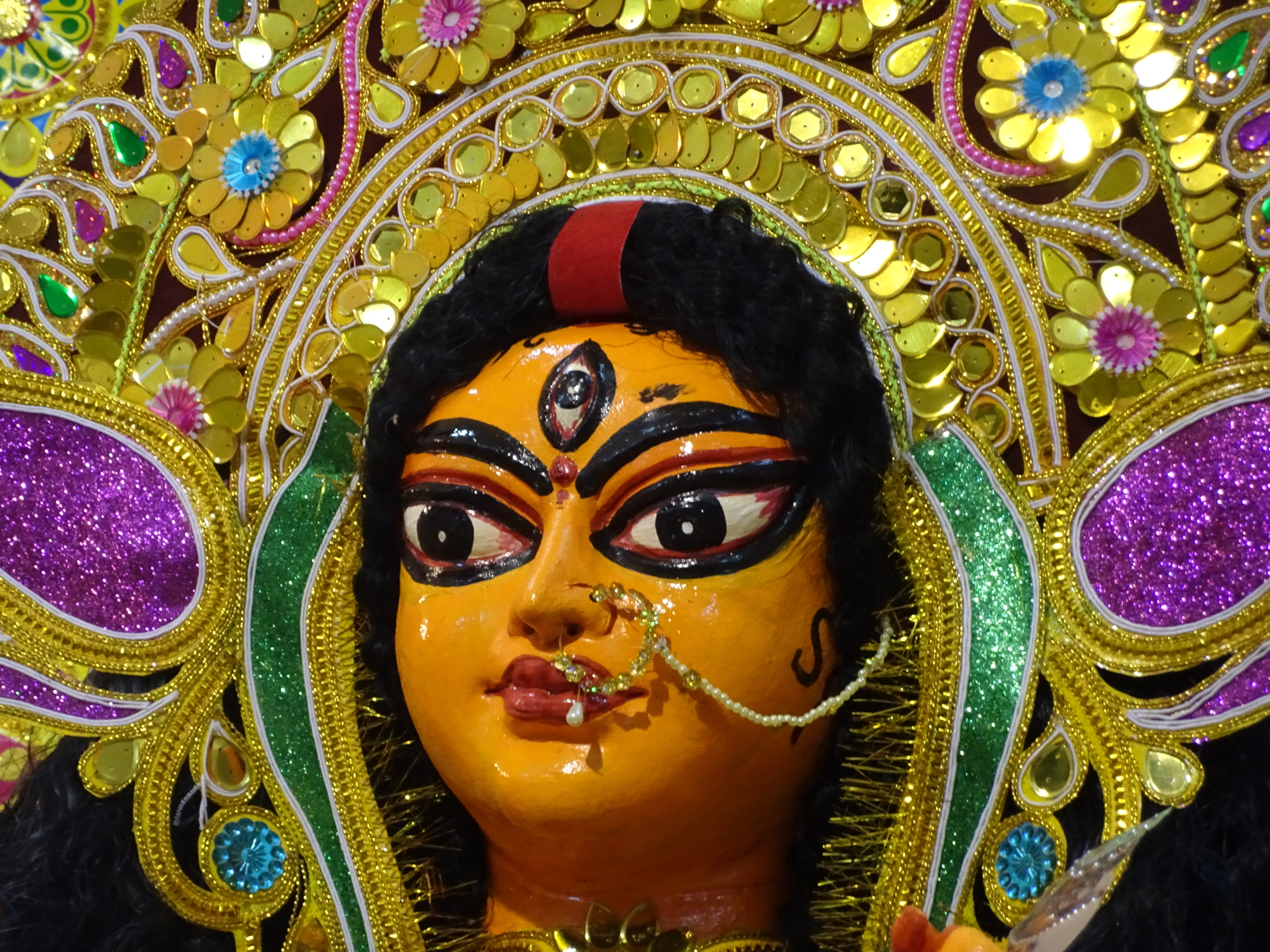
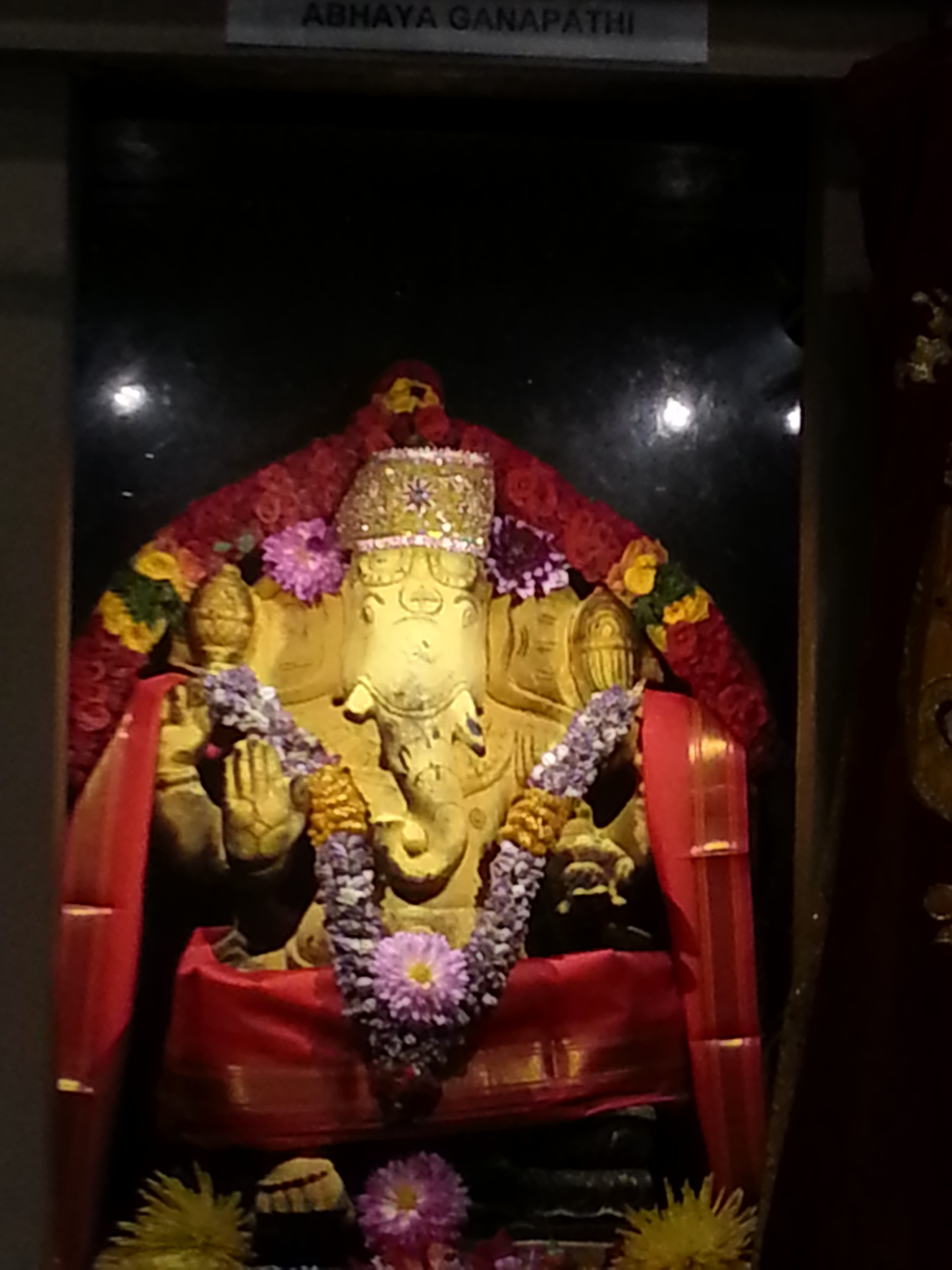
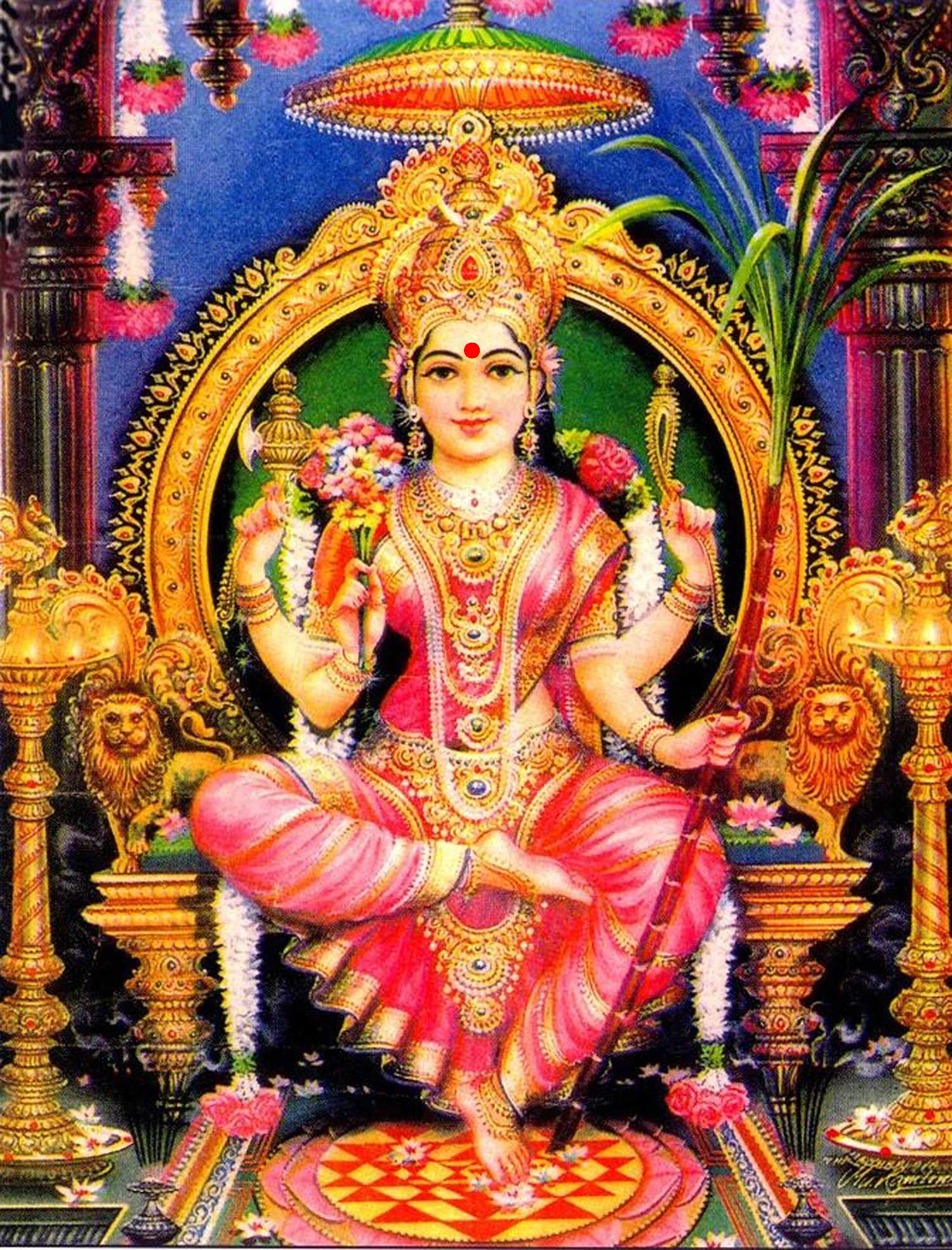


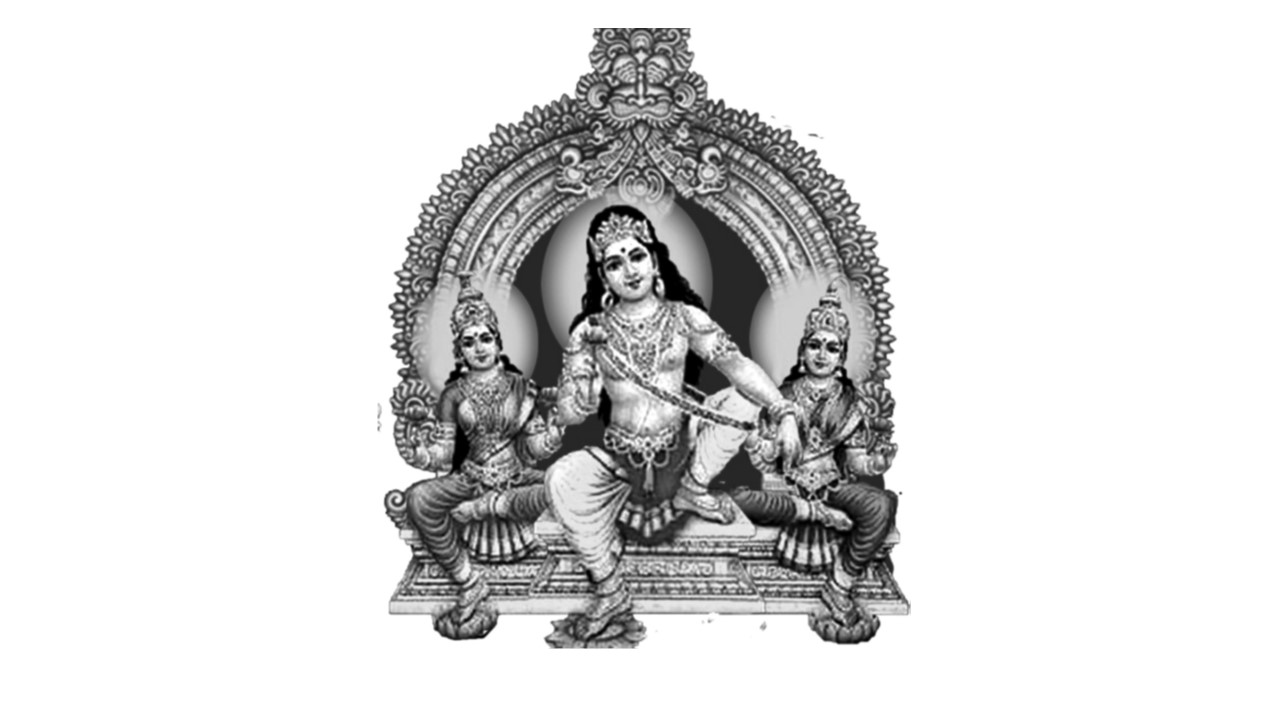

 21BanyanTree Life Coaching
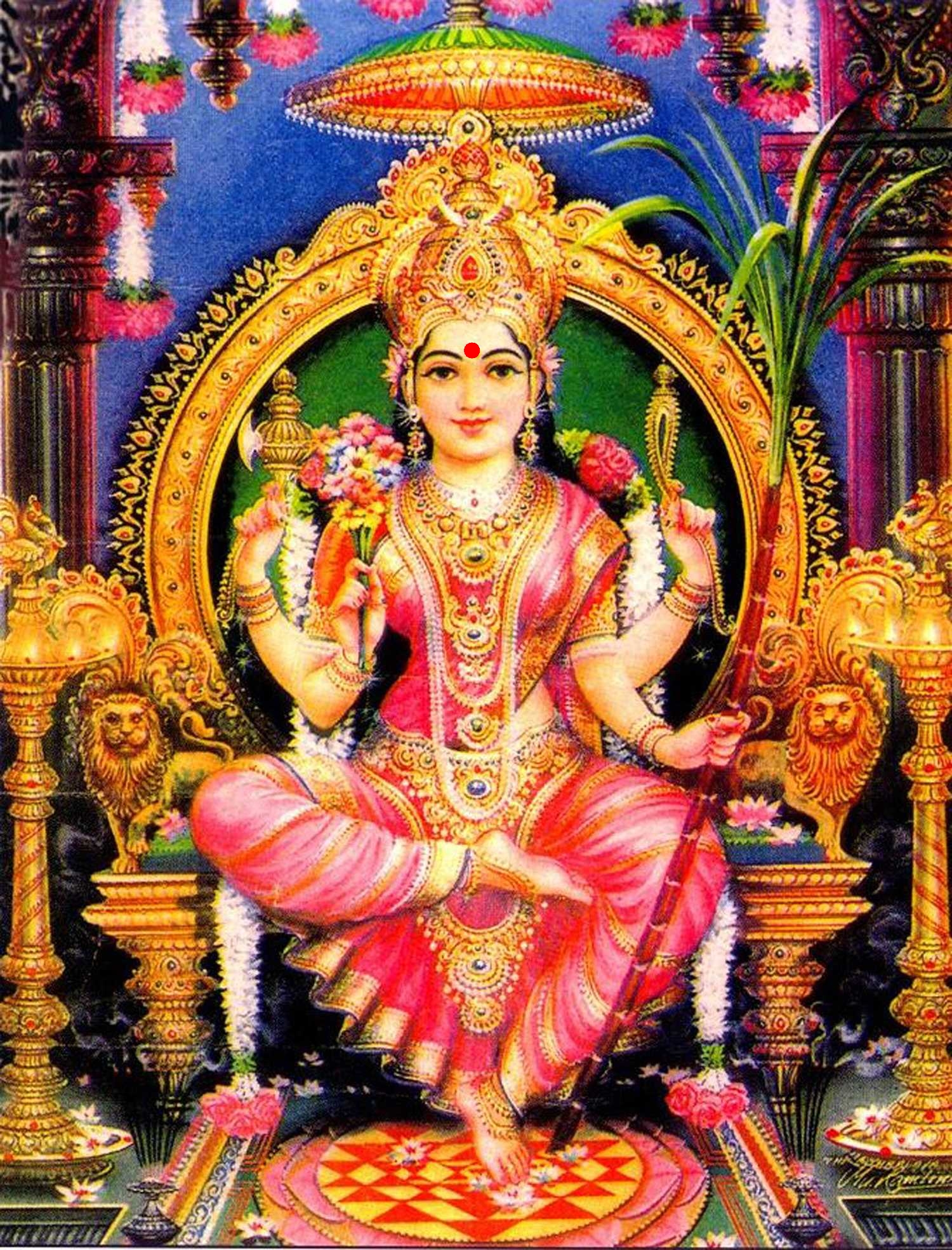
You must be logged in to post a comment.