Discover Yourself, Reframe Your Future Stories, Become Stronger, Be Different
Author /Jayant Kalawar
Posts by Jayant Kalawar
Coach and Strategizer II Advaita Vedanta, Sri Vidya II Systems Thinking, Antifragile Strategies II
Blog: https://21banyantree.com/blog-at-21banyantree/
Author: Outsider Deconstructing European Enlightenment https://www.amazon.com/OUTSIDER-DECONSTRUCTING-EUROPEAN-ENLIGHTENMENT-Death-ebook/dp/B07RHVRV7V
https://www.facebook.com/21BanyanTree/
Twitter: @21BanyanTree
Contact: jayantkalawar@gmail.com
Three civilizational design principles in the VedA. Civilizational continuity in a changing world. A Perspective on Response of Hindu AchAryAs to Changing Patterns of RtA. The non-response to 15th century European incursions in the South of India. Continuing Non-Response to the 21st Century Globalism.
Continuing Non-Response to the 21st Century Globalism
By Jayant Kalawar, August 29th 2023
In the 21st century there are currently two sets of technologies, which through their ubiquitous use, have become an integral part of the patterns within which humans experience their life cycle: technologies to manage female body cycles, specifically menstrual cycles, contraception, surrogate and ivf birthing. The second is telecommunications and computing technologies. These two technologies have enabled substantial amplification of the feminist movement. Some call it cyberfeminism and networked feminism[i], to characterize the digital revolution, which includes not only internet based social media, but more importantly AI and bio-informatics, leading to emergence of a socialized digital mental life integrally connecting through bio-tech with biological life. These technologies are enablers of both sukshma sharira and sthula sharira in humans.
As we noticed earlier in this paper, invention of double entry bookkeeping and joint stock company organization enabled risk taking projects helped usher in the industrial revolution and made Europe dominant. The feminist movement[ii][iii][iv] along with scalable organizational capability of the internet may in the near future lead to a transhumanist revolution[v]. The civilizational threat (to stability of the materialist state) that AI-Biotech based transhumanist revolution will pose has been given considerable thought: “A general ability to stabilize a vulnerable world would require greatly amplified capacities for preventive policing and global governance”.[vi] The intellectual drivers for such a feminist-transhumanist revolution, enabled by new technologies, are the elite universities in the USA[vii]. The AI-Biotech enabling technologies in the 21st century are likely to play the role of destruction of labor intensive manufacturing based industrial societies, just as in the 17th century industrial technology enabled destruction of India’s flourishing handloom textile industry. The desire and will, the sankalpA, required to accomplish dominion through the industrial revolution in the 17th century was provided by the owners and managers of joint stock companies out of Europe, supported by their Kings. In the 21st century the technology based drive for dominion is more complex: the desire and will for dominion using feminist-transhumanist revolution is provided by a lose interconnected network of tech billionaires, elite US Universities, media, globalized financial markets, financialized Corporates and the US State institutions[viii]. This interconnected network seems to have a life of its own, which current Western social theories are unable to explain and therefore unable to develop public policy. We are muddling through the process of adapting social organization processes and technologies to respond, influence and adapt to the feminist-transhumanist revolution.
How will Hindu AchAryAs respond to emergence of such a transhumanist revolution? Is the response going to be pro-active or are we going to repeat our performance of the past, with Hindu AchAryAs not engaging in questions of social organization and processes (“we do not engage with MllechA” being one such response)?
So where do we go from here? How may a VedA based DharmA renaissance arise, while taking into account a globalized interdependent world with multiple mAnav sanghatanA?
First, the two current major competing paradigms, one based on European Enlightenment (Capitalism with Democratic representative or authoritarian state) and Islam (with its global Ummah and local Masjid), claim universal application to the entire mAnav jAti. Any VedA based renaissance may have to clearly and compellingly articulate in a practical way how it will enable flourishing of the entire mAnav jAti and indeed all inhabitants and ecology on mother Earth, not just BhArata or Hindus.
Second, the current Euro Enlightenment based Artha and Kama ShAstrAs supporting globalized world and potential oncoming feminist-transhumanist revolution is based on a) Newtonian-Einsteinian physics which assumes space-time as fundamental reality and b) evolutionary theory of biology which gives primacy to sthula sharira and does not account for sukshma and KAraNa sharira. Despite their limitations, these theories have enabled technology and engineering which have helped very large numbers of GrihastAs in the mAnav jAti[ix]. For VedA based renaissance to emerge, there may have to be a) a new theory of physics arising out of the concept of space-time being a dependent reality based on prANa-spandanA and b) a new theory of biology based on jIva being seeded in the sthula sharira with the first infusion of prANa from the cosmic spandanA.
Third, any renaissance of Hindu Dharma would have to be led by GrihastA well accomplished in desh-kAl-paristhiti (hence not the renunciate Brahmacharis and Swamis) and at the same time knowledgeable and immersed in the knowledge and practice of understanding the human manifestation as sharira treya. Development of robust explanatory descriptions of the emergent phenomena based on first principles of Hindu shastrAs are going to be one of the necessary conditions for such a renaissance to arise. What may a beginning of such shastra based explanatory descriptions look like? Here is a link to my provocative essay Is Marriage Necessary? , if you would like to explore further on this trail, which may take you away from the rutted path we have habituated ourselves to for quite some time. So, will there be a Hindu Civilization in the future? Perhaps it will depend upon how much fire Hindu grishastas generate through their intellectual Tapasya….
[i] “Cyberfeminism and networked feminism (fourth-wave feminism)
The term cyberfeminism is used to describe the work of feminists interested in theorising, critiquing, and making use of the Internet, cyberspace, and newmedia technologies in general. The term and movement grew out of ‘third-wave’ feminism. However, the exact meaning is still unclear to some: even at the first meeting of cyberfeminists The First Cyberfeminist International (FCI) in Kassel (Germany), participants found it hard to provide a definition, and as a result of discussions, they proposed 100 anti-theses52 (with reference to Martin Luther’s theses) on what cyberfeminism is not. These included, for example, it is not an institution, it is not an ideology, it is not an –ism.
Cyberfeminism is considered to be a predecessor of ‘networked feminism’, which refers generally to feminism on the Internet: for example, mobilising people to take action against sexism, misogyny or gender-based violence against women. One example is the online movement #metoo in 2017, which was a response on social networks from women all over the world to the case of Harvey Weinstein, a Hollywood producer who was accused of sexually harassing female staff in the movie industry.” https://www.coe.int/en/web/gender-matters/feminism-and-women-s-rights-movements
[ii] One way to describe the feminist revolution in terms of AchArya Abhinavgupta’s teachings is that the IchA of Swantantrya, the desire for individuated autonomy, that is carried in each inward breath, finds much more scope of play, for the female sthula sharira, due to technologies for managing menstrual cycles, birth control and birthing.
[iv] “Indian women spend eight times more hours on unpaid care work than men. The patterns are similar across educational qualification, and employment or marital status: women with higher education, or earn their own incomes, do not spend any less time on unpaid care work. Shifting mindsets and rebalancing domestic work requires coordinated effort from key stakeholders, with public-led investments in care infrastructure and services complemented by soft interventions from private sector employers and community-based organisations.” Extracted from https://www.orfonline.org/wp-content/uploads/2022/10/ORF_OccasionalPaper_372_Time-Use-Gender_new.pdf
[v] “Transhumanism is a loosely defined movement that has developed gradually over the past two decades.[1] It promotes an interdisciplinary approach to understanding and evaluating the opportunities for enhancing the human condition and the human organism opened up by the advancement of technology. Attention is given to both present technologies, like genetic engineering and information technology, and anticipated future ones, such as molecular nanotechnology and artificial intelligence.
The enhancement options being discussed include radical extension of human health-span, eradication of disease, elimination of unnecessary suffering, and augmentation of human intellectual, physical, and emotional capacities. Other transhumanist themes include space colonization and the possibility of creating superintelligent machines, along with other potential developments that could profoundly alter the human condition. The ambit is not limited to gadgets and medicine, but encompasses also economic, social, institutional designs, cultural development, and psychological skills and techniques.
Transhumanists view human nature as a work-in-progress, a half-baked beginning that we can learn to remold in desirable ways. Current humanity need not be the endpoint of evolution. Transhumanists hope that by responsible use of science, technology, and other rational means we shall eventually manage to become posthuman, beings with vastly greater capacities than present human beings have.” Extract from https://nickbostrom.com/ethics/values (accessed on October 18th 2022).
[vi] The Vulnerable World Hypothesis, Nick Bostrom, Future of Humanity Institute, University of Oxford Abstract: Scientific and technological progress might change people’s capabilities or incentives in ways that would destabilize civilization. For example, advances in DIY biohacking tools might make it easy for anybody with basic training in biology to kill millions; novel military technologies could trigger arms races in which whoever strikes first has a decisive advantage; or some economically advantageous process may be invented that produces disastrous negative global externalities that are hard to regulate. This paper introduces the concept of a vulnerable world: roughly, one in which there is some level of technological development at which civilization almost certainly gets devastated by default, i.e. unless it has exited the ‘semi-anarchic default condition’. Several counterfactual historical and speculative future vulnerabilities are analyzed and arranged into a typology. A general ability to stabilize a vulnerable world would require greatly amplified capacities for preventive policing and global governance. The vulnerable world hypothesis thus offers a new perspective from which to evaluate the risk-benefit balance of developments towards ubiquitous surveillance or a unipolar world order. Source: https://nickbostrom.com/papers/vulnerable.pdf
[vii]Snakes in the Ganga by Rajiv Malhotra and Vijaya Vishwanathan, 2022, provides insightful perspective of the deep and broad the momentum of this feminist-transhumanist revolution, emerging out of elite US Universities, targeted at BhAratiya society.
Three civilizational design principles in the VedA. Civilizational continuity in a changing world. A Perspective on Response of Hindu AchAryAs to Changing Patterns of RtA. The non-response to 15th century European incursions in the South of India. Continuing Non-Response to the 21st Century Globalism.
The Devi Waiting For Her Children (c) Jayant Kalawar 2019
Besides the invasions from the north west by carriers of the Islamic flag, Europeans began making incursions in the south of India beginning late 15th century. How did Hindu AchAryAs respond to these incursions?
Here is a summary description of selected European incursions, beginning with the Portuguese entry into KeralA and subsequently Goa, Daman and Diu, beginning May 1498, while the Vijayanagara Empire (1336 – 1646) was at its peak. These examples show how newer forms of social organization and technologies enabled non-Hindu cultures to gain control over BhArat over long periods of time, implying that with initiative and curiosity Hindus could have learned these new ways and thus maintained and extended their domain into the Central and Western Asia and Europe 800 years ago.
The invention of double entry book keeping by Money Lenders / Bankers in Europe in general and Italy in particular beginning in the 13th century enabled merchants to lend risky long term project funds[i] (as opposed to specific asset based letters of credit e.g. Hundis) to Kings and Archbishops to finance trade related voyages combined with the cultural project of missionizing Christianity. This funding process helped Spain launch Columbus to the Americas (1492 – the quest was for the Indies but landed in the Americas) and Vasco Da Gama to India (1498). Design and construction of long distance sailing ships with substantial platforms to carry cannons was commissioned through such funds. The financing of these well-armed long distance sailing ships launched Europe’s global imperial project. When Vasco Da Gama arrived in Kozhikode (aka Calicut) he was given permission by theSamoothiri to set up a Portuguese trading post, along with missionaries. Vasco Da Gama headed back to Lisbon. The Portuguese traders were a competition with the Arab traders[ii] who had set up shop in Kozhikode since the 12th century. The Arab traders had their own militia for protection of their assets and also served as the Samoothiri’s navy for protection of the port as well as protection against pirates of the trading ships plying to and from Yemen as well as Egypt. The Arab traders persuaded the Samoothiri to expel the Portuguese. The Portuguese sent a ship with the message of an impending siege by the militia of the Arab traders at the behest of the Samoothiri. The trading post was able to withstand the siege for about 3 months, when 3 Portuguese armed (with cannons) ships arrived. It is said that on just the sight of the armed ships, the soldiers who had laid siege ran away (this may be an exaggeration, but the net result is not in contention). That was in 1503.
The Portuguese thereafter focused on defeating the Arab naval forces that were controlling the Arabian Sea. A pivotal naval war in 1509 ending with victory of the Portuguese armed ships over the joint forces of India based Sultans, the Ottomans and Egypt[iii]. What was the Navy of the Empire of Vijayanagara doing? It seemed to be mostly based out of Honavar and focused on raiding Arab ships plying from Yemen and Aden to the sub-continent with horses bred for cavalry of the Mughals and Sultans who were preparing to attack and occupy Deccan. These naval raids secured a channel for supply of cavalry horses for the Vijayanagara Empire. The Vijayanagara naval commander, Timoji, at Honavar was also reputed to have provided intelligence to the Portuguese armada, enabling its victory in the war against the combined navies of the Sultans of Gujarat, the Ottomans and Egypt in 1509. Subsequently, Timoji is also said to have advised and enabled capture of Goa by Afonso de Albuquerque in 1510. For his services, Timoji was briefly made the interim governor of Goa.
So it may be that it was in 1509 when BhArat began coming under European hegemony, much before European Renaissance which began in late 16th century. Rest was just a matter of time[iv].
Did Hindu AchAryAs guide Hindu kings to establish trading posts in Yemen, Aden, east coast of Africa in the 800 years (since 9th century, during the RashtrakuTA’s there are references to Arab merchants camping on the west coast) prior to Vasco Da Gama’s landing and later (post Vasco Da Gama) in Europe? What efforts were made to secure and learn techniques of double entry book keeping, funding risky long term projects and building out of the new weapons and naval technologies that were coming out of Europe, post Vasco Da GAmA’s landing in Kozhikode?[v]
Extending double entry book keeping to accounting equation gave rise to concept of risky equity by the second half of 16th century Europe. That led to formation of the Joint Stock Company as a social organization. East India Company was one of the joint stock companies (1590), with large number of small investors[vi]. The company was chartered, under the umbrella of the United Kingdom of England and Wales, specifically for investing in a high risk project of setting up trade route to India. The joint stock company social organization and the social contracts with individual investors enabling higher risk ventures continues to be the core social contract across the globe today.
The management of the joint stock company was responsible of making returns for the investors in ways that are legal. In 1757 at battle of Plassey, Jagat Seth financed the war for the East India Company, including bribing Mir Jafar so Robert Clive can win. Did Jagat Seth know about the concept of joint stock company? In 1750s (more than 150 years after its founding) East India Company was in its death throes. Jagat Seth could have taken over the company and made Clive his employee. Was that explored? If not, what kept Hindu money lenders / bankers from learning and exploring about this form of social organization?
In general, people from all over the world came to both the western and eastern shores of India. China sent trading ships to the east coast ports, for example, for millennia. Did Hindus set up trading posts and dominion relationships with any of these countries they sold to? It would be interesting to research to [vii]see whether the exports had to be paid for with gold and silver, since there appears to be little reference to what India was importing. If indeed that is so, then it would make sense that so much gold was available in Deva SthAnAs across India. One could even speculate that the importers of Indian products having been under pressure of producing more gold to buy Indian imports would resort to raiding Indian temples for gold as a way for them to then being able to buy Indian products once again.
All of these ways of social and economic behavior (including especially the non-responses) that I have described above makes sense from within the Hindu culture, which teaches us to act as Karma yogins – produce and consume minimally, and celebrate the Divya ShAktis opulently in their Deva SthAnAs. This may come across as a harmonious stable perspective. However, it leaves the Hindu sanghaTanA vulnerable to attack from non-Hindu sanghaTanAs and to dynamic changes in RtA. To non-Hindu materialist outsiders (the MlechhAs) such practices may come across as infantile, of a people needing to be civilized.
[i]https://core.ac.uk/download/pdf/234631058.pdf The origin of double entry bookkeeping is generally associated with Luca Pacioli. As a matter of fact, the history of accounting cannot be complete without highlighting the wonderful work of Luca Pacioli. His book “Suma de Arithmetia, Geometria, Proportioni et Proportionalita” which was published in 1491 had two chapters – de Computis et Scripturis – describing double entry bookkeeping. His idea reflected the business activities of the Venice at as that time, especially the way they recorded financial transactions. This is to say that even before Pacioli published his book, the Merchants of Venice actually maintained accounting records which of course, they did in a particular way. So in his book, Pacioli simply described this peculiar method used by the early merchants to keep their records. This method was referred to as “the Method of Venice” or “the Italian Method”. This is to say that Luca Pacioli did not invent the double entry system of accounting. He only described the method of accounting practiced at that time.
[ii] “VAsco Da GAmA, for example, might never even have reached India had he not been guided there from the Adrican coast by an experience Arab pilot. And when, after an epic voyage of more than 12,000 miles, he and his men finally did arrive in the subcontinent, they were astonished to be met in the harbour of Calicut by two North African Muslims, both of whom could understand Portuguese” Pp 16-17, Casale, Giancarlo, The Ottoman Age of Exploration, Oxford University Press, 2020.
[iii] The Indian and Arab vessels carried gunpowder weapons, but even the largest dhows, built shell‑first with flexible hulls, were too weakly constructed to mount heavy guns. The Portuguese seized the weather gauge at the start of the engagement, testimony to their ships’ sailing qualities; this enabled them to engage or disengage at will. The Portuguese squadrons apparently fought in line ahead using broadside fire to systematically devastate the more lightly constructed, heavily manned Arab and Indian craft.87 The victory was clearly decisive. Further resistance to the Portuguese at sea was either sporadic or dependent on external support.
The next serious challenge to the Portuguese came in 1508 in the form of an expeditionary force mounted from the Red Sea under Mamluk direction with Ragusan and Venetian technical assistance and based on a hard core of Mediterranean war galleys. Reinforced with a large number of local vessels provided by the Sultan of Gudjerat, the force, under Hussein Pasha, caught a Portuguese squadron at anchor in the River Chaul and attacked with overwhelming numerical superiority. The Portuguese held out for three days before being overwhelmed, eloquent testimony to the defensive power of their vessels and the effectiveness of their ordnance. Of three naos and five caravels engaged, only two caravels got away a circumstance which suggests that the critical determinant of escape was handiness under sail and that the Portuguese could defend the low-lying caravels as well as the tall naos. Whether because of a lack of direction or heavy losses and the need for repairs, Hussein’s squadron retired to Diu where it was caught in port and annihilated the following year by a Portuguese squadron under Almeida. https://www.angelfire.com/ga4/guilmartin.com/Revolution.html
[iv] The core reason for Portuguese naval success, against the Arab-Turkish navy in the Arabian Sea, was superior naval technology emerging out of Europe: Carracks and Caravelles, long sailing ships designed to carry powerful (for that time) heavy cannons. Such development was made possible by funding for risky long term projects becoming available, enabled by double entry book keeping. The Vijayanagara as well as the Arab-Turkish navies used dhonis (powered by oars, rather than long sails) to carry armed infantry, ram the opponents ship, board them and take them over. That dhoni based naval strategy did not stand a chance against the sails and cannon combination, which bombed opposing ships from a distance. Source: Ibid
[v] The Ottoman’s, after the defeat in 1509 in the Arabian Sea, hired Venetian ship builders to build out its navy with the latest available technologies. There is evidence that such technology was available to Hindu kings. For example with Portuguese armada that arrived in 1503, to protect their trading post in Kozhikode, there are references showing that there were agents of weapons sellers from Venice on board that armada. After all, the armada was manned by privateers, mercenaries, in the pay of the King of Portugal dependent on loans funded by merchants. Some cannons were sold to the local Hindu kings, and with training, they were used against the Portuguese armada. That seems to indicate that Hindu kings could potentially have developed allies in Europe for selling their products directly to merchants in Europe, rather than through the trading posts that European kings were forced to send to India when the Ottomans cut off trading routes to India. Was that done? If not, what prevented Hindu kings from doing so?
[vi] Dalrymple, William, The Anarchy, Bloomsbury Publishing Inc, 2019, Pp 7-8 “the EIC was from the very first conceived as a joint stock corporation, open to all investors”. And “The idea of a joint stock company was one of Tudor England’s most brilliant and revolutionary inventions”.
[vii] There are a few exceptions of kings sending trade and dominion missions from the east coast of India going to south east Asia as well as east Asia. Kalinga was one of them – and that came to an end with the invasion by Emperor AshokA about 2300 years ago. The kings of Tamil Nadu also ventured forth in first millennia CE. What caused them to lose influence is a question that needs to be researched.
Aum sri MAtre NamahA Cover art by Jayant Kalawar 2018.
Three civilizational design principles in the VedA. Civilizational continuity in a changing world. A Perspective on Response of Hindu AchAryAs to Changing Patterns of RtA. The non-response to 15th century European incursions in the South of India. Continuing Non-Response to the 21st Century Globalism.
A Perspective on Response of Hindu AchAryAs to Changing Patterns of RtA
By Jayant Kalawar, August 24th 2023
In this section I present a perspective on the changes in patterns, the RtA, that humans experience (given limited human capacity for awareness and self-reflection) and see how the Hindu intellectual culture responded to the changes in the patterns.
The last ice age is supposed to have begun receding in the norther hemisphere of the Earth about 12000 years ago[i]. Perhaps that was the beginning of the 13000 year phase of the approximately 26000 year cycle of the Earth’s precession, when the climate in the northern hemisphere is relatively benign. Assuming the preceding 13000 years was an extended ice age on the Eurasian landmass, one would expect mass migration of those who could move down south – and BhArat becomes one of the most hospitable areas for this period of time. Then beginning about 12000 years reverse migration out of India into northern parts of the Eurasian land mass could have started. Even within those 12000 years, there have been mini ice ages. These mini ice ages may bring mass migrations from the north to down south, often manifesting form of violent raids. Similarly, current research findings seem to point to extended periods of drought between 1500 BCE and 500 BCE, leading to mass migrations – leading to end of Bronze age civilizations, which after many centuries arose again as Iron age civilization. Civilizations built by mAnav sanghatanA over multiple millennia, within these 13000 year phases of the Earth’s precession, may come to an end due to such extended broad and deep events. There are many threads that extend out of such a frame that may lead to ग्लानि of DharmA and responses to such decay and need to be researched[ii]. This paper takes up one response from the Hindu mAnav sanghatanA to such continual destructive war raids on the fertile settled community of the Punjab, by nomadic pastoralists from the North West flying the flag of IslAm: the response of Guru Nanak and the rise of the Sikh Panth.
The frequent raids for plunder, as a means of production for their own mAnav sanghatanA seem to have begun with the well documented raids (at least 17) led by Mohammed Ghaznavi between 1005 CE to 1030 CE. This was followed by even more violent plundering invasion by Timur (the first Mughal) in 1398, ending with the sacking of Delhi after the defeat of the Delhi Sultan at Panipat. A little over a century later, Timur’s great grandson Babur, launched a series of raids on the Punjab and surrounding areas, beginning about 1519 and until 1529. Guru Nanak’s Babur-vaNi articulates the senseless carnage of Babur[iii].
the B ̄abar-v ̄an. ̄ı verses elucidate how Guru Nanak encountered Babur at Saidpur, singing a hymn in Persian language to the tune of a wartime melody, and exposing the greedy tendencies of the aggressor in a most intimate way.
In the last 20 years of his life (to 1539), Guru Nanak developed a response to these frequent plundering raids, through pratyaskha pramAnA (empirical observation) of the desh-kaal-paristhiti, using the lens of the VedA.
How is it that it took Hindu sanghaTanA about 400 years of plundering raids and depredations from the North West to eventually come up with dynamic application of the VedA in response to the threat to DharmA? To get a glimpse of the intellectual landscape of that time in BhArat, I point to the Sarva Darshana SangrahA of Acharya VidyAraNya[iv] (late 13th to late 14th century CE) of Sringeri MathA. The sangrahA covers 16 different darshanAs from CarvAka, Bauddha, JainA, PratibhijnA (with a special respectful mention of AchArya AbhinaguptA’s prolific work) to Sri Adi SamkaraCAryA’s VedAnta. The two darshanAs that were also in play in BhArat at that time, Christianity (in Kerala) and Islam (in Kerala and all along the west coast), are not included in the sangrahA. Clearly those two were not part of BhArat’s intellectual lineage. So they may not make it into the darshana sangrahA. Perhaps there were other documents with critical reviews of these two darshanAs that were made so that their potential threat to the Hindu mAnav sanghtanA could be analyzed through the lens of VedA? If so, the MathAs may be able to provide these documents so that we may learn and benefit from them.
During AchAryA VidyAraNyA’s time Arabs flying the flag of Islam were active on the west coast and especially in Kerala) does not include a critique of the IslAmic darshanA both for understanding their own assumptions and perspective and then applying the lens of the VedA to describe how, under what circumstances, such a Darshana may arise among a mAnav sanghatanA. That would enable formulation of a response. Perhaps the singular focus on personal liberation with de-valuation of samsArA as nothing but suffering through endless re-births, left no room for desire among the highest level of Hindu AchAryAs to invoke the IchA shakti[v] for restabilizing and defending the Hindu sanghatanA. Perhaps such desire and focused intention to re-build DharmA, as a vibrant renewing combination Kama Shastra, Artha ShAstra and Moksha Shastra, have been largely absent among Hindu AchAryA lineages in the last 2500 years?[vi] Does the focus on MimAmsA (interpretation of the VedA), VyAkaraNA (PaNini’s grammar with its logic) and TarkA (debating skills) used to train Hindu AchAryAs lead to dis-association with ability to describe and explain non-VedA based knowledge systems and how they arise in the world, in terms of the VedA? Calling out non-VedA based knowledge systems as either NAstikA or MllechA leads to denial and therefore to vulnerability to attacks.
[i] “Twelve thousand years ago, the great ice sheets retreated at the beginning of the latest interglacial – the Flandrian – allowing humans to return to northern latitudes. This period has been relatively warm, and the climate relatively stable, although it has been slightly colder than the last interglacial, the Eemian, and sea levels are currently at least 3 metres lower – differences that are being closely scrutinised by researchers keen to understand how our climate will develop.” https://www.newscientist.com/article/dn18949-the-history-of-ice-on-earth/
But this respite from the ice is likely to prove short-lived, at least in geological terms. Human effects on the climate notwithstanding, the cycle will continue to turn, the hothouse period will some day come to an end – and the ice sheets will descend again.
[ii] For example nomadic pastoralists have been a mAnav sanghatanA that is not rooted to a geographic locale. Islam played a key role in building a code a conduct among these nomadic pastoralists, so that they could identify as a community, Umma. When times were harsh for these pastoralists, they raid mAnav sanghatanA settled for a long time in specific geographic locale and flourishing – the Hindus of BhArat for example.
[v] Guru Nanak’s MahA VAkya Ik AumkAra Sat NAm is his foundational link to the VedA. The assertion of the MahA VAkya is that there is only one (Ik) Sat (the unchanging),and it is known by the name (Nam) of Aum (AumKAra). The implication is that everything else, other than, Aum, that humans experience is Asat, changing. The rest of Guru NAnak’s VaNis are about drawing in people to come together and chant and do YajnyA. The chanting of the Guru Vanis and acting out the sacrifices are resonant of the Rig VedA verses I quoted at the beginning of this paper.
Guru NAnak guided this yajnyA performed by his community through mantras that he composed and led the sacrifices in tune with the particular desh-kaal-paristhiti that his community found itself in.
[vi] Perhaps it has something to do with the structuring of the AchArya intellectual process mostly involving renunciates since the time of Siddhartha GautamA, who do not have pratyaksha pramAna of the grihastAshrama in general and more importantly in the dynamically changing RtA with desh-kAl-paristhiti? Guru NAnak, a grihastA, accomplished a veritable transformation in his community from within the teachings and guidance of the VedA. Perhaps the Sringeri MathA, to which AchArya VidyAraNya belonged, had published multiple revised versions of the Sarva Darshana SangrahA over the last 600 years? If yes, does it include a closely argued review of the Sikh Panth, followed by debates and discussions to explore and learn and assimilate the learnings of Hindu communities under immense stress responded? If yes, how can those be accessed, discussed publicly and extended to the present times?
The Devi Waiting For Her Children (c) Jayant Kalawar 2019
Three civilizational design principles in the VedA. Civilizational continuity in a changing world. A Perspective on Response of Hindu AchAryAs to Changing Patterns of RtA. The non-response to 15th century European incursions in the South of India. Continuing Non-Response to the 21st Century Globalism.
About 3500 to 2500 years before now, there seems to have been a phase when DharmA in BhArat, was in a long period of decay especially in its political economy (governed by Artha ShAstra) and social formations (governed by KAma shAstra). Research and analysis may be required to understand how the decay in the network of bronze age civilizations[i], beginning about 3500 years before now, played into such decay of DharmA in BhArat. In the meanwhile, the contradictions in the Dharma SutrAs of GautamA for example, provide us a glimpse of how DharmA was applied during that range of time. The SutrAs describe how large masses of the mAnav sanghatanA were to be treated with an iron hand. On the other hand, those entrusted with understanding the changing nature of RtA and use of the over-arching principles given by the Rishis to adapt DharmA to desh-kaal-paristhiti, did not seem to be active. As a reaction to such prevailing decay of DharmA, there seems to have emerged an energetic reaction among the mAnav sanghatanA, around about 2500 years ago there began emerging multiple intellectual responses to this civilizational slide. KautilyA in India. Aristotle in Greece. Han Fei in China. All three intellectual responses were focused on humans as social and political beings – thus the formulations were in terms of KAma and Artha shAstrAs[ii]
At around the same time, BhArat also experienced a different response to this crisis: that of Siddharth Gautama (about 5th century BCE) was one manifestation. Siddhartha Gautama not only gave up his Kingship role (Raj DharmA) but also his role as GrihastashramA. He seems to have articulated the challenge that Hindu AchAryAs had failed to provide guidance on how DharmA practices should adapt to changing in RtA. However, instead of working on re-building VedA based DharmA, Siddhartha Gautama chose a different path: of an assertion that samsArA was full of suffering with personal liberation (NirvANa) the only way out of that suffering of endless births.
Siddhartha GautamA’s response with his pivot to personal liberation as the only path to release from samsArA was mainstreamed by Emperor AshokA about 2300 years ago. Subsequent to this pivot, intellectual conversation on social technologies based on VedAngAs (which form the basis for Artha and Kama shastras, including state building) seems to have come to a stand-still among Hindu AchAryAs[iii]. The capacity on the Hindu civilization to respond to changing dynamic nature of RtA declined. Hindu civilization became vulnerable to attacks from non-Hindu mAnav sanghatanA.
To understand this point of dynamic nature of RtA better, let me take a short diversion. Humans are able to observe certain (very limited) bandwidth of cosmic rhythms (the major part of RtA). For example the rhythm of the Moon that is correlated with the tides, Sun’s annual (solar year, which is how humans broadly share and manage time globally in this epoch) north-south pulsation giving rise to seasons. There are other pulsations of much lower frequency: consider the axial precession of the Earth, which apparently has a frequency of about 25,800 solar years. Our ancestors were cognizant of this. Shastras based on Vedanga Jyotish were an attempt to research and regenerate a more subtle human understanding of RtA. The HC has not tended to researching and developing of this area of knowledge for at least more than a millennia. Consider for example, the possibility that annual solar cycles undergo small changes which accumulate and result in climate changes in the hemispheres, through the progression of precession of the equinox[iv]:
Axial precession makes seasonal contrasts more extreme in one hemisphere and less extreme in the other. Currently perihelion occurs during winter in the Northern Hemisphere and in summer in the Southern Hemisphere. This makes Southern Hemisphere summers hotter and moderates Northern Hemisphere seasonal variations. But in about 13,000 years, axial precession will cause these conditions to flip, with the Northern Hemisphere seeing more extremes in solar radiation and the Southern Hemisphere experiencing more moderate seasonal variations.
There have been variations in seasons even within the 13000 years, which then have given rise to changes in rhythm for humans. This may have lead to seasonal migrations from the steppes to the plains, with annual raids as a means of production against the settled agricultural societies. Not only is RtA dynamic, its patterns reflect the entire range of short and long term spandanA of the cosmos.
The question that arises, if we were to assume dynamic nature of RtA, is: How can mAnav jAti shape and maintain DharmA by continually aligning with dynamic RtA?
Hindu DharmA may have seen diminished capacity to provide the protection (physical security) and abundance (economic security) due to the intellectual pivot away from focus on supporting Grihastashrama and towards aspiring for moksha as the solution to suffering of samsarA, about 2500 years ago. I would like to offer a more contemporary perspective on the challenge that Hindu AchAryAs face if they wish to be responsive and adaptive to dynamic nature of RtA in the 21st century.
As many of you know, there are broadly two types of Artificial Intelligence (AI – neural network programmed big data computing) models. One is classificatory AI model that can be trained once and then used for ever to select cat images from among a large collection of random images. The basic building block for this type of classificatory modeling is the subject-predicate-object model. Same as the core of the VyAkaraNa rules laid down by Maharishi PANini[v] about 2500 years ago for Samskrit. These classificatory models can then begin generating sentences with meaning as well (see for example Open AI GPT-3). Flourishing of Samskrit literature post PANini did that as well.[vi]
The other broad type of AI model is time series based, where it keeps learning and training itself, based on new data it actively looks for. For example Alpha Go. The reinforcement learning method enables opening up new areas that humans have not thought of. The latest example, at this time of writing, is successful use of Alpha Tensor to develop a more efficient way to do matrix multiplications, which are core to AI and require considerable computing power and therefore energy[vii]. Cultures which have this capability to learn from changing environmental patterns may have a better chance of adapting and of being resilient to protect and sustain their Grihastashrama configuration. Hindu AchAryAs due to their focus on personal liberation[viii] (Moksha Shastra) led by non-Grishastas (Brahmacharis, Swamis, renunciates from KAma and Artha) in about the last 2500 years, may have under-cut its cultural intellectual capacity to monitor, learn and respond to changing patterns of RtA. For example, consider how the following popular verse from the Bhagavad Gita was interpreted by most (and perhaps all) SAmpradAyA Gurus[ix] from the Moksha shastra lens (and I then offer an interpretation through my Artha Shastra lens):
कर्मण्येवाधिकारस्ते मा फलेषु कदाचन। मा कर्मफलहेतुर्भूर्मा ते सङ्गोऽस्त्वकर्मणि।।2.47।।[x]
Sri RAmAnujAchAryA’s commentary is helpful in providing perspective for this verse through the Moksha ShAstra lens: “As for obligatory, occasional and desiderative acts taught in the Vedas and associated with some result or other, you, an aspirant established in Sattva, have the right only to perform them”[xi]. First, the AchArYA narrows down the actions to KarmAs (actions) prescribed in the Karma Kanda of the VedAs. He further narrows it down to say the guidance is being given to those already established in Sattva (thus being devoid of Rajas and Tamas). And the guidance is that such individuals should perform actions set forth in the VedAs without asking for anything in return and without expecting any fruits from performing the VedA prescribed Karma KAnda actions.
More recent pracharaks and commentators of the Bhagavad Gita, while recognizing the Gita as a Moksha Shastra, no longer nuance that the actions it references are Karma Kanda actions and applicable only to those established in Sattva (hence free of Rajas and Tamas). The exhortation of doing work without expectations of fruit is made applicable to all actions and to all individuals[xii]. How does such guidance, provided through the Moksha shastra lens, impact functioning of GrihastashramA in a rapidly changing material world that most Hindus experience? From their commentary it is clear that Hindu AchAryAs approach the Bhagavad Gita as a Moksha Shastra. How does that help with encouraging curiosity and initiative required to monitor, learn and adapt to be resilient in a dynamic RtA? How does it assist in applying the desh-kaal-paristhiti principle to enable robust GrihastashramA?
Now let us see how an alternative perspective of the first line of the Bhagavad Gita verse 2-47 from an ArthA perspective may provide different guidance:
You may act (karmaNye) to the best of your competence (the adhikAra you have acquired). However, the fruits from your actions (phaleshu) are not (mA) certain (kadAchana).
Introducing the sense of certainty / uncertainty may enable exploration of the dynamic nature of RtA in particular desh-kaal-paristhiti states. It may open up curiosity for ways of collaborating in the rapidly moving theater of the Devi. An integral part of the script in the Devi’s theater for mAnav sanghatanA is playing out of GrihastAshramA. The backdrop in the theater and other actors and scripts (whether climate, natural environment, multiple mAnav sanghatanA each with its own culture) they speak may keep changing. But the core RtA, enduring pattern, for mAnav sanghatanA is an effective and enduring GrihastAshramA process. So what may help Hindu Civilizational renaissance is VedA based DharmA that is dynamic and cognizant of the changes in RtA to enable flourishing of Hindu GrihastashramA.
MAnav sanghatanA experiences changes in RtA from two broadly different sources: a) the change in patterns of natural environment and b) the change in patterns due to human produced technologies. Given the rapid development of human constructed technologies in the last two hundred years, this source of changing patterns needs to be recognized while considering DharmA configurations to support Grihastashrama in the 21st century. These pattern changes have been introduced by technologies developed mostly by non-Hindu mAnav sanghatanA. Have Hindu grihastAs adapted to these technology driven pattern changes through ad hoc imitation, rather than thoughtful DharmA based adaptation? That is explored in the next section.
[v] In turn based on the core model of human cognition given by the VedAs: prameta-pramANa-prameya.
[vi] Hindu culture is well accomplished in this classificatory model, with its major regional languages adopting PANini’s VyAkaraNa as their grammar, beginning sometime in the 8th-9th century CE (Kannada language is said to be the first regional language to have accomplished this through the RashtrakutA court).
[viii] Hindu AchAryAs use the tools they gain from study of MimAsA (structured interpretation) based on VyAkaraNA (grammar of MaharishI PANinI) and TarkA (logic again based on VyAkaraNA). These are tools help generate abstract mental models that are internally consistent in their logic. They do not support modeling and production of systematized knowledge of the vibrant pulsating cosmos that humans experience with their every breath.
Background: What makes for Hindu Civilization now?
By Jayant Kalawar, August 22nd 2023
This paper describes a futures perspective on VedA based Hindu Civilization, Manav DharmA, in the context of the general angst among many Hindus that Hindu Civilization[i] (HC) may be under attack. I notice three types of responses to this angst. One is to defend HC as a 5000+ year old living civilization with interpretations of texts and cultural processes handed down through the generations as evidence. The second is to call for a renaissance of HC in the context of changing material paradigms. I see Sri Aurobindo’s and Veer Savarkar’s writing in this second approach. The third is the modern secular Indian approach of saying HC belongs to the museum. This paper may be seen as a mix of the first two responses: a search for what led to stagnation and vulnerability of DharmA in the last 2500 years with focus on VedA based Hindu intellectual history, its impact on Hindu mAnav sanghaTanA, and speculation of futures with opportunities and challenges for possibility of renaissance of VedA based DharmA.
I begin by positing three VedA based over-arching architectural principles for designing and constructing flexible, practical, adaptive, resilient mAnav DharmA:
An over-arching VedA principle of cooperation to form mAnav sanghaTanA[ii].
The principle of aligning with RtA, the dynamic patterns of cosmic pulsations at all levels from micro to macro.
The principle of desh-kaal-paristhiti (space-time-circumstance) to ensure responsive flexibility and resilience to ensure aligning with the dynamic unfolding of RtA.
Much of my thinking in this paper is an extension of what I have already presented in my blog post titled Aligning Human Time Cycles with the RtA of the VedA[iii] .
I end that post by quoting what I notice as the over-arching principle of mAnav sanghatanA in the Rig Veda, the last two verses of RV 191.10:
“May all chant the same mantrAs, may they aspire to the same goals, through shared purpose and desire. I will join in your mantra chanting, I will offer the same sacrifices as you so that we may achieve our shared goals.”
“May all have the same intention and desires in their hearts, may all have similar thoughts so that we may connect and work in unison”
The Rishi is guiding us step by step in the process of how mAnav sanghatanA emerges: a) having shared goals b) with shared desires and purpose. The success of this process of accomplishing shared purpose and desires requires c) offering to give up on individual desires (sacrifices, elsewhere known as yagnya) that are inimical to the shared purpose and desires. The pre-requisite of entering into working together, as a mAnav sanghatanA, through individual sacrifice, the Rishi goes on to say, begins with us as individuals generating the same sankalpa, same intentions and therefore the same desires in our hearts. It is this sankalpa, the shared intention and desire, that is open to agency and will, not only in individuals, but as a sanghatanA.
Let’s examine three recent practical examples of Hindu mAnav sanghatanA accomplishing shared purpose and desires to better understand what the Rishi is saying: the Indian struggle for freedom from the British Empire in late 19th and first half of the 20th century[iv], Lokmanya Tilak inspired Ganesh Utsav to bring together Hindu community in early 20th century[v] and the rise of ISKCON over the last 50 years or so[vi].
Does the VedA provide guidance on what kind of shared goals are to be preferred and for what reasons, for mAnav sanghatanA to work in unison? For an answer to that question, let us turn to the second architectural principle of DhArmA: RtA.
My exploration of the theme of RtA in the VedA, which I have covered in my blog post[vii], was focused on examining the role of coordinating individual and social action over time, to ensure social coordination. I described how the development of PanchAnga technology, with daily detailed measurements of time across geographical areas of BhArat, with methods described in VedAnga Jyotisha, was instrumental in enabling large scale actions of mAnav sanghatanA. The panchanga technology enables aligning of the spandanA associated with Earth’s fortnightly interaction with the Moon (which gives rise to tides and pulsation of underground water levels on Earth) and annual interaction with the Sun (which gives rise to the seasons on Earth). The capacity of Hindus to align with the RtA of the Moon and Sun enabled agricultural and market cycles, and therefore the emergence of a flourishing agriculture based civilization.
In this paper, I wish to posit a different, more macro, aspect of RtA for mAnav sanghatanA as a JAti. The manifestation of the jagat through Shristhi by the Shakti aspect of ShivA has an enduring capacity, even while it is ever changing. This enduring capacity we know of as Sthiti. In the current sthiti we find ourselves in, the mAnav jAti is one of the many inter-connected manifestations in the Devi’s jagat[viii]. Currently this mAnav jAti has an enduring quality of hundreds of thousands, if not millions, of solar years. The enduring quality of the manifestation of the mAnav jAti is sustained through reproduction combined with long term nurturing of each generation. Such endurance has been made possible by the human capacity[ix] to produce social organizations as well as supporting technologies. The core organizational process, developed based on insight and guidance from the Rishis of the VedA, that ensures long term endurance of mAnav jAti is GrihastashramA.
That takes us to the last of the three over-arching architectural principles for DharmA design: desh-kaal-paristhiti.
The repetition यदा यदा seem to point to events of DharmA collapsing that have happened in the past and expected to happen many times in the future. The repetition of युगे युगे points to such collapse and subsequent rejuventation is to be expected in many different epochs. In the ItihAsAs we notice descriptions of some deshAs being at peak of practice of DharmA, while others were in a state of DhArmik collapse. Thus at the same time in different spaces, the emergent state of DharmA is seen to be quite different. Similarly in the ItihAsAs we notice that in particular paristhitis (situational contexts) Sri RAma and Sri KrishNa act in ways that may not be considered DhArmic. Hence consideration of the dynamic of paristhiti in DharmA articulation appears to be valid. The proposed over-arching architectural principle of desh-kaal-paristhiti, therefore, appears to be known, in Hindu traditions.
I posit that Rishis of the VedA were aware of that DharmA processes and structures have to keep pace with changing of RtA. They were also aware that RtA of the VedA, a complex dynamic interaction between myriad spandanA of Shakti, would undergo change. There would have to be many updated versions of articulations DharmA SutrAs. It is my understanding[xi] that Gautama’s and Baudhayana’s Dharma sutra treatises themselves reference many previous versions of articulations of DharmA. The Sutras themselves are to be seen as ‘rochak jhanki’[xii], an appreciative snap shot of how DharmA principles were interpreted and applied at a particular time and place, based on interpretation of smritis.There are modern examples which point to capacity of mAnav sanghatanA to develop knowledge to manage and control complex processes that change rapidly over time[xiii]
Should one expect social processes of mAnav sanghatanA to change as the patterns in the environment change, while ensuring that the underlying physics and over-arching architectural principles from the VedA continue to be the foundational building blocks? If so, how is it that we, in the Hindu sanghaTanA, continue to go back and reference operational and user manuals[xiv] for social processes from 2500 years ago, with no new versions generated? That is the question I begin addressing in rest of this paper.
[i] Civilizational angst may have become a global phenomena with the publication of Samuel Huntington’s Clash of Civilizations in 1996. A precursor was Arnold Toynbee’s 1948 Civilization on Trial. Both these reflect the civilizational themes of European Enlightenment as articulated in the 17th (Hobbes) and 18th (Rousseau) centuries. I have provided a perspective of the civilization that has emerged from the European Enlightenment in my bookhttps://www.amazon.com/OUTSIDER-DECONSTRUCTING-EUROPEAN-ENLIGHTENMENT-Death-ebook/dp/B07RHVRV7V
[iv] Indian freedom fighters[iv] shared the goal of SwarAjya. They took up the sankalpa to work towards that goal, while sacrificing their livelihood, and in many cases, their lives. To inspire the mAnav sanghatanA they arose from, they came up with mantras to be chanted together by everyone in that mAnav sanghatanA: Vande MAtaram and Jana Gana Mana. The momentum from this process I just described, in such thread bare outline, manifested the desired result of SwarAjya. The sacrifices and the joint chanting of the mantrAs by the hundreds of millions in the BhArat’s mAnav sanghatanA continues to be felt to be necessary to sustain that desired goal of sustaining SwarAjya. The guidance from the insight of the Rishi of the Rig Veda is so deeply ingrained, in the practitioners of the processes of Hindu culture, that book reading and scholarly knowledge are not a necessary pre-requisite for it to be activated.
[v] LokmAnya Tilak inspired the celebration of Ganesh Utsav in early 20th century as a way of bringing out Hindus visibly into the colonized public square. The celebration became an integral part of LokmAnya. Hundreds of thousands of local community leaders have (and continue to) volunteer their time and funding, as they have over more than a hundred years, to make the shared goal of bringing Hindu practitioners into the public square, by celebration of Ganesh Utsav, an annual success in MahArAshtra. The common shared mantra that is chanted together by the mAnav sanghatanA at the Ganesh Utsav is Jai Dev Jai Dev Jai Mangal Murti[v]. The success of Ganesh Utsav reflects the insight and guidance of the Rishi of the Rig Veda that I have referenced above.
[vi] ISKCON is an international Hindu community institution that evolved out of a shared goal of extending the VaishNava teachings and practice of Chaitanya MahAprabhu of the 15th century globally. Thousands of followers sacrificed their livelihood and way of life and dedicated themselves to this sankalpa. Their common shared mantra that is chanted together by the mAnav sanghatanA of ISKCON throughout the world is Hare KrishNA Hare KrishNA Hare Hare[vi]. ISKCON may be considered as one more successful application of the Rishi’s of insight and guidance on how mAnav sanghatanA come together to work together to bring about change to enable flourishing of the collective.
[viii] VedAnta practitioners may be more familiar with IshwarA’s jagat.
[ix] Humans have a capacity (albeit limited) of self-awareness (emergence of a combination of sAkshi bhAvA and ahamkAra) and self-reflection (pratibhijnA, cognition of objects, including mind, body and sensate world) which gives rise to human language, logic and meaning making, which are then used by the species to attempt to create technologies to shape the objective environment they cognize and at the same time attempt to develop stable structures of social processes, which we name as DharmA, to align with the RtA.
[xi] Based on my reading of Gautama Dharma Sutra by Pandey, Umesh Chandra, 1966 as downloaded from https://ia601600.us.archive.org/13/items/in.ernet.dli.2015.429882/2015.429882.gautama-dharma.pdf , Yaska in his writing circa 7th – 5th century BCE references ancient DharmashastrAs. The book also point out that an especially important aspect (vishesha mahatva) of Dharma SutrAs is that they provide “SAmAjik Jeevan kI rochak jhAnkI”. See Pp 6 – 7 of the publication in the linked document.
[xiii] An example of how mAnav sanghatanA respond to changing situations comes to mind from my vantage point of having some knowledge of development of complex computer systems from mid-20th century into the second decade of the 21st century. The operating, maintenance, training and user manuals for IBM 1620 (card reading) computing machine of the 1950s and 60s was very different from the IBM mainframe computing machines in the 1970 and 80s. There have been many more changes in the supporting operational and maintenance procedures as client-server (including PC based client) systems architectures emerged in the 1990s, and by 2007 began morphing to cloud based mass server side computing, with internet and satellite connectivity enabling a global network of client side devices. I cannot imagine reading up an IBM 1620 card reading computing operations manual and then advising someone on how to operate in a cloud based global environment. On the other hand, the underlying physics and mathematics of how computing machines run, as well as the over arching architectural principles (of reliability, flexibility and responsiveness) have not changed over this times. The point to be made from this diversion is that there is underlying continuity due to factors I just stated. At the same time, due to changes in the connectivity environment (with communications technologies also undergoing generational changes based again on the same physics, maths and overarching architectural principles), the application of these technologies changed the way they were used by mAnav sanghatanA globally. And with that, has changed the operating, maintenance and user manuals for the computing machines that we use.
[xiv] I am pointing to e.g. the Dharma Sutras which are chronicles, ‘rochak jhanki’. I see the Samhitas, Upanishads, Smritis and Vedangas, are sources from which we can glean the physics and the over-arching architectural principles of the Hindu civilization.
ॐ श्री मात्रे नमः (Photo by Soumik Dey on Unsplash)
By Jayant Kalawar, June 19th 2023
I was invited to participate in an online panel discussion on the institution of marriage in contemporary times that took place on April 17th 2023[i]. The panel discussion was moderated by Professors Dr Jayanti P. Sahoo[ii] and Dr. Aparna Dhir-Khandelwal[iii]. The moderators focused on how women’s roles have changed in contemporary times through their work in business, professions and academia. They contrasted these changing roles with an overall lack of change in roles in marriage, where women continue to shoulder disproportionate responsibility in carrying out child nurturing and household maintenance activities. If marriage is to be an equal partnership among spouses in what they contribute into the marriage, then it seems that modern women are getting the short end of the stick.
In this post I am exploring a big picture approach on how to think of the institution of marriage using selected principles from Hindu ShastrAs (from darshanas and agamas). I hope to inquire (this post is just a beginning) how such principles may help in understanding different frameworks for marriage that have emerged in different parts of the world, at different times over many millennia[iv].
I am making this exploration of how the explanatory power of concepts from Hindu ShastrAs can help us understand changes in core human social organization, household and marriage, that we are witnessing in recent times. I hope to describe what I see through the lens I am constructing. Not to prescribe, not to moralize. The aim is to open up thoughtful conversations on the practical matter of marriage as a social institution, using a lens constructed from Hindu ShAstrAs. Conversations which do not devolve rapidly into prescriptive sermonizing and hopefully instead open up more than one intellectual spring from the deep and broad glacial wisdom of Hindu ShAstrAs.
I am somewhat familiar with social and cultural flows in India and the USA. So the examples of a range of forms of marriage I present, in the course of my exploratory inquiry here, are from these two countries.
For example, in India there currently (in 2023) are three different recognized legal frameworks for marriage: Muslim Personal Law (1937), Special Marriage Act (1954) and Hindu Marriage Act (1955). The emergence of these three laws of marriage over the last hundred years reflects the reality of multiple streams of Indian cultural and social histories converging in the modern Indian nation-state. In March of 2023, the Supreme Court in India took up the matter of whether marriage between individuals of same sex would be legal under the Special Marriage Act. This may be seen as a reflection of the currents of globalization crisscrossing India. Much of such currents emerge from the USA at the present time.
In the USA, institution of marriage has been contested in different ways. In the mid-19th century there was a contest between monogamy and polygamy when Utah was incorporated into the United States, with monogamy, as a result, becoming the established law across all states[v]. In the late 19th and early 20th century, social and legal status of women in USA changed, giving women property rights, followed by political rights of voting. In the mid to late 20th century opportunities opened up for women to work outside of home, to earn independent incomes, especially post World War II. Through these steps women gained autonomy, which then reflected in changes in the form of the monogamous marriage. Divorce laws emerged in different states, along with child custody and community property related legislations[vi]. Marriage in practice became dependent on continuing agreement between two adults of opposite sex to co-habit, have and nurture children. Marriage thus became subject to continued agreement between the two adults and resulted in no-fault divorce legislations emerging in the late 1960s and early 1970s. In late 20th to early 21st century question began being raised whether two individuals same sex can get married. Same-sex marriage was ruled to be legal in 2015 by the US Supreme Court.[vii]
So what drives different human communities to develop different norms for the institution of marriage at different times? I am not presenting a ground up cultural anthropology perspective[viii]. I am presenting a top down first principles based perspective from within Hindu ShAstrAs. My hope is to re-discover explanatory power of Hindu ShAstrAs to address seemingly complex questions that humans face, such as how the institution of marriage undergoes change depending on desh-kAl-paristhiti.
Here are a few concepts from my understanding of Hindu SHAstrAs that I will bring into play in this initial exploration into the institution of marriage.
One is the concept of svAtantrya, freedom, autonomy, as articulated in the PratibhijnA branch of Advaita by AchArya UtpaladevA, Somananda and Abhinavagupta in the 10th and 11th century CE. This is a shruti concept articulated by rishis.
A second concept is that of LeelA, the myriad dynamic manifestations of the Devi. LeelA is playful expression of desires, the acting out of svAtantrya.
SvAtantrya and LeelA may be seen as seamless process concepts to describe the principle of sat-chit-ananda-iccha-jnana-kriya.
A third subsequent concept is a particular manifestation of LeelA as Manav Jati, with the desire to sustain and grow it. How is the Manav JAti to sustain and grow? As a response to this desire of the Devi Hindu ShAstrAs propound AshramAs of a life cycle of the human physical body, with grihasta AshramA being the central phase in a human life span. As we know, this has been spoken of in smritis and dharma sutrAs, constructed by Shastrajna’s based on empirical observations of different roles played by humans in different phases of their life cycle in the context of specific desh-kAla-paristhti.
I propose that we understand these concepts by viewing the human in a sharira-traya frame of sthula-sukshma-karana sharira.
SvAtantrya is the essence of freedom expressed by ShAkti and drives myriad manifestations reflecting playful desires of Shiva-Shakti. In the individual human, this Svantantrya principle manifests as AhamkArA. The desires of AhamkArA play out at as individuality at the level of Sukshma sharira through the Jnanendriyas. In turn, the desires of the AhamkArA are channeled as actions by the JanendriyAs through KarmendriyAs in every day interactions with other humans and the in the natural environment – with the intention of satisfying desires. The five tatwas, essences, that undergird SvAtantrya are chit-Ananda-iccha-jnana-kriya[ix].
Manifestation of SvAtantrya as human species on Earth: through the play of the Devi’s Iccha-Jnana-Kriya shaktis the five bhuaktika tatwas arise: earth-water-fire-air and sky. In parallel, arise jnanendriyas and karmendriyas. One such configuration of jnanendriyas and karmendriyas when it interact with the earth-water-fire-air-sky manifests as the human species. One of the Icchas of the human species so manifested is to sustain and grow itself. That leads to the play of grihasta AshramA, the householder.
The concept of grihasta AshramA has been central to procreation and sustenance of the physical body, the sthula sharira, of the human species. The sustenance of the sthula sharira of the human species is an expression of the playful desire of Shakti to enjoy the panch tan mAtrAs. While svatantrya concept promotes individuality in humans, the grihasta Ashrama concept promotes cooperation and collaboration, to enable sustenance and growth of the species.
With this background I begin my exploration of the current state of the institution of marriage which is a core human social construct within the Devi’s LeelA, play, of grihasta Ashrama.
The two concepts of SvatantryA and Grihasta AshramA may be seen to be orthogonal to each other. When an individual human is fully committed to grihasta AshramA, let’s say a 100, the svatantrya principle is at zero. When svantantrya is at 100, grihasta ashrama is at zero.
The role of marriage in grihasta ashrama being central, its form and unfolding in a social milieu will reflect the balance struck between the two principles. What drives such a balance between svatantra principle and the grihasta ashrama principle? I suggest it is a combination of the three sources of disturbances that humans experience as propounded in SAmkhyA: adibhauktika, adidaivika and adhyatmaka.
Adibhautika may be taken as socio-economic, often technology driven, and environmental flows in a society over which humans may have control over.
Adidaivika may be seen as great natural forces over which humans have no control over for example ice ages, many decades of droughts and consequent famines.
Adhyatmaka may be seen as the capacity to cognize and become aware of dynamic changes in adibhauktika and adidaivika. SAmkhya shows there is considerable scope of misapprehension of such experiences by humans. When such misapprehensions are multiplied over many humans, it results in sustained confusion. I suggest that this tendency towards confusion, arising due to limitations in the human cognitive process as described in SAmkhyA, leads to loss of capacity to strike a balance between svantantra and grihasta Ashrama principles, when such balance is disturbed from Adibhauktika and Adidaivika sources. Human groups then work towards bringing balance back. As marriage is a core engine of balanced human flourishing, success of the re-balancing process of the form and dynamic of marriage becomes one of the drivers for sustaining and growing human groups.
So now let’s look at applying these concepts to get a sense of current state of marriage in the USA and India. First here is some high level background:
The Respect for Marriage Act (RMA) of 2022 passed by the US Congress made civil unions among any two human individuals legal. This not only allows two individuals of opposite genders to enter into a civil union, even if that is not recognized or sanctified by one or more religions, it also enables same sex partners to enter into legal civil unions. In turn, such same sex couples can legally adopt and raise children, just as opposite sex couples can.
The RMA of 2022 also specifically made interracial marriages legal. Until 1960s, there were a number of states in USA that had laws declaring interracial marriages unlawful. The US Supreme Court ruled in 1967 that such state laws were unconstitutional. However, it was not until 2022 that US Congress positively recognized interracial marriages as legal.
The RMA also excludes civil unions among more than two individuals, thus declaring polygamous unions continue to be illegal.
In India, as listed earlier there are three major laws governing marriage (as listed earlier). Under one of them, Muslim Personal Law(1937), polygamous marriage is legal, marriage is contractual and between individuals of opposite sex. Divorce is relatively easy. Property division is according to contract entered into at time of marriage. The Hindu Marriage Act (1955) enables marriage of two individuals of opposite sex. Divorce is not easy. Property matters are subject to laws governing Hindu joint families. The Special Marriage Act (1954) enables two consenting adults of opposite sex to enter into marriage. Divorce is possible. Property division can be contentious in case of divorce. Inheritance laws under each of these acts differ, reflecting custom and history of the constituent community that is supported by each act.
The current conversation among younger generations in India seems to be around live-in relationships[x]. Hearings by the Indian Supreme Court about legality of same sex marriage has also made for headlines in India recently (May 2023)[xi]. The Court directed that the Union Ministry of Law and Justice to have its Law Commission to seek views and ideas from civil and religious groups to develop a Uniform Civil Code (as of June 14th 2023) for marriages, divorces, child custody, property division and inheritance.
So how to explain the apparent difference in trajectory of the institution of marriage in the USA and India using the conceptual tools I have identified above?
Of the three sources of change (Adibhauktika, Adidaivika and Adhyatmika), American socio-economic frame responds to the Adibhauktika the most (changes to human made material technology and social constructs). It secondarily focuses on changes in Adidaivika (large scale natural events such as hurricanes, floods, droughts, wild fires). Relatively, it focuses least on Adhyatmika (the self-aware cognitive process, which in humans is prone to mis-apprehension as SAmkhyA elegantly articulates). The technologies it has developed leads to enabling svantantrya, individuality / autonomy (and to remind ourselves, svantantrya in humans manifests as ahamkAra). As individuals are more able to sustain themselves with less cooperation and collaboration with other individuals, the need for households decreases. So if over all economic and health wellbeing of the individual is less dependent on group collaboration, then size of households is likely to decrease, including rise of single households. We see that happening in the USA. Along with this, as reproductive technology gains traction (freezing eggs and semen, in-vitro fertilization, surrogate pregnancies and more), the need for marriage may change and along with that its form. In other words, if the desire to sustain and grow the human species can be satisfied utilizing technologies that require less collaboration and cooperation, social constructs of households and marriages may change to adapt so that individuals can express their individuality more.
Recent US history supports such analysis. The combination of two factors stand out vis a vis the svAtantrya principle. One is women in the work force outside of the home beginning with industrialization and accelerating in late 1940s, after World War 2. The second is technology to manage reproductive process. As a combination of these two factors, the svAntantrya principle has acquired higher value in recent decades relative to previous socio-economic-technology epochs. In turn, it has promoted individuality, thus leading to challenge to structure of grihastashrama in general and marriage in particular. Thus single parent household, as well marriage of same sex partners, may be seen as a viable option to raise children.
Of the three streams of marriage frames that currently flow in parallel in India (Hindu Marriages Act (1955), Special Marriages Act (1954) and Muslim Personal Law (1937), I have some familiarity of the Hindu Marriages Act.
The Hindu Marriages Act in India is based on traditional norms practiced by Hindus over many millennia, with some changes to suit the current paristhiti as perceived in mid-20th century: marriageable age for females was set at 16 (previously in many Hindu communities the practice was marriageable age for females to be at puberty, which could mean age as low as 9 in some cases). Another change was to uniformly enforce monogamy (previously some Hindu communities practiced males having two wives under certain circumstances). The inheritance laws of the unified Hindu joint family were carried forward, especially for example the male child’s mother and sisters having claim over inheritance along with the widow. Rules for division of property in case of divorce is also not clearly defined ,as divorce was assumed to be an exception than the rule.
The norms of Hindu marriage and accompanying grihastashrama (householder) roles in Hindu joint families were practiced by learning them through repetitive performance of specific rituals. As one illustrative example, the ritual of Gauri Puja (also called Hartalika in northern India) in Karnataka teaches how the wife goes to her mother’s house due to a tiff with her husband. The son is sent to persuade her to come back home, in the process showing great respect and admiration for his mother and the husband for his wife. The rituals are still performed, but the desh-kAl-paristhiti has changed. Such practices have now become more performative and less learning and action paradigms that may have been the original intention.
As the gusts of technology and finance driven globalization course through Indian socio-economic and cultural framework, one key outcome has been increase in sense of svAntantrya, especially economic freedom, among a fair number of Hindu women, especially in urban areas. Those gusts of globalization are Adibhauktika. They are to be expected. Resilience in the face of these gusts is to sharpen Adhyatmika, to go back to first principles and redesign norms in context of desh-kAl-paristhiti. Not through doubling down on norms designed and articulated in specific desh-kAl-paristhiti about 2500 years ago.
In my estimation, at present stage of my self-study and research, Hindu ShAstrAs have the capacity to not only explain the challenges that the frames of marriage and householder (grihastashrama) may be currently facing in India. They can also provide guidance on how to redesign these social frames so that they are more resilient to and enduring in the face of the current technological and financial forces that are at play. It opens up the possibility to do so in a transparent manner with critical thinking based on philosophical principles, that can involve youth in the conversations in collaborating in the redesign.
Let’s take up some edge cases to test the explanatory power of the beginnings of the philosophical conceptual framework I am positing. For, it is the edge cases that challenge the mainstream core. When we recognize the edge cases as an integral part of Devi’s LeelA, then we can begin to gain an understanding of how the edge cases can co-exist with the mainstream core. The nucleus of a human cell is where all the action may take place within the cell. But its sustainability and capacity to multiply depends on how secure the cell borders are. For social constructs such as the institution of marriage, those borders, I posit, are the edge cases.
The edge cases I will very briefly take up here, in the context of the institution of marriage are: of widows, widowers, divorcees, single parents as well as individuals who do not fit neatly into the binary of male and female categories. For purposes of this already long post I will set up questions for each of these edge cases, which may open doors to further inquiry in subsequent writings.
Are widowers better able to form new households or expand their existing households as they have better income and asset potential in the USA? Are they better able to do so among Hindus due to inheritance laws and relatively higher social status? Conceptually, the economic leg up gives more svAtantrya, the play of ahamkara.
Do widows, especially relatively younger ones, face more challenges to sustain their household roles due to relatively lower income and asset levels in the USA (which may have improved in the last few decades)? Are inheritance laws and social status concerns a challenge to Hindu widows? As global technology and financial changes give Hindu women more capacity to act on their svantantrya, will they challenge current Hindu grihastAshrama, household and its core building block, marriage along with inheritance norms?
Similar questions can be raised for the divorcee edge case, for males and females. As Adibhauktika changes manifest as socio-economic theater, the scripts for various roles of the humans play in the LeelA of sustaining and growing a flourishing human species on Earth will change. Does the svAntantrya principle seem to have a feedback loop in the Adibhauktika theater manifestation – to enable more play? Is this something that manifests through roles of human females?
The edge case of single parent household begins to bring the question of whether and how human children can be nurtured to healthy flourishing adults outside of marriage. Can humans begin to cognize nurturing and raising children as a separate function from conceiving and birthing them? Can we consider emergence of a social organization (the notion of the state), with supporting technology and finance, driven by the human svatantrya impulse for individuality and autonomy as Adibhauktika? Perhaps whether the single parent household will grow depends upon whether the twin IcchA, the desires of the Devi, of individual svantantrya and of sustaining and growing human species on the other, are satisfied? If through social organization of technology and finance these twin desires are met, will it make marriage an optional way of conceiving, birthing and nurturing children to adulthood?
The questions raised in context of single parent household sets us up to inquire about the last edge case we will consider here. Can two individuals of same sex live together and nurture children to healthy flourishing adulthood? If so, would that be considered marriage?
The questions posed in the context of the edge cases require research and discussion. That in turn may lead to better understanding of how grihastashrama, households, and marriage as a core central institution may evolve with changes in Adibhauktika and Adidaivika.
The twin Indic philosophical concepts of Svantantrya and LeelA may enable one to deconstruct the institution of marriage and household (grihastashrama) for the current desh-kAla-paristhiti in two different social milieus, USA and India. There may be potential to do so without having to depend solely on authority of what the practices and institutional designs were 2500 years ago when the desh-kAla-paristhiti were very different. That tells me that Hindu ShAstra concepts have the explanatory power that humans seek so that they can construct social organizations in consonance with Adibhauktika and Adidaivika. My sense is that such explanatory power arises due to concepts Hindu ShAstrAs being deeply rooted insights from AdhyAtmika perspective of Rishis.
So where do we go from here? I see opportunity for practical redesign conversations among Hindu constituents using concepts from the Hindu ShAstrAs so that, for example, the Hindu Marriages Act can be amended to reflect current desh-Kal-paristhiti while retaining the Adhyatmika guidance from our Rishis, without having to depend (especially as sole authority) on Adibhauktika designs from 2500 years ago tailored for those times and places. In other words, we may have an opportunity here, through extended tapas, to rejuvenate multiple intellectual springs from the deep and broad glacial wisdom of the Hindu ShAstrAs, so that the springs come down to the plains of desh-kAl-paristhiti to nourish us all.
[iv] Over the at least the last 2500 years or so human households (group of humans identifying as a family, with different roles to support each other is how I see households) provide the platform for us to play out our life cycle, from conception, birth, nurturing, adulthood and old age. They were and are a key to inter-generational human flourishing. Marriage was and is the core foundational block in such human households. Human groups across time and geography have come up with different ways of forming households. This is in turn reflected in different forms of marriage.
In the last hundred years or so, the emergence of the welfare state (consequent to emergence of the nation-state in Europe post the Enlightenment) in tandem with technology and financial organization, has offered a number of support functions that households provided in the past to the process of raising children to be healthy and flourishing adults. In turn, the form and function of households and marriage has undergone change.
Comparing that evolution to society’s views of gays and lesbians, Kennedy noted that for years, “a truthful declaration by same-sex couples of what was in their hearts had to remain unspoken.”
It depends. On phase of life cycle. On particular circumstances at a given time and so on. Desh-kAl-paristhiti.
That said, there is a way to expand the sense of time to live a more fulfilling life.
Living in the world of senses makes us seek sense gratification through pleasures. Sense pleasures are transitory. The demand for seeking out different ways of gratifying the senses keeps increasing. Time passes quickly in pursuit of sense pleasures.
Living in the world of buddhi, the intellect, slows down time. ShravaNa (interpret as study here) and manana (contemplation, through writing, repetitive performing) can help here. Study and writing slow down time, as your attention gets focused. Same happens with learning and performing music, dance, painting, sculpting. Focused attention slows down time, enabling the physical and emotional body a better chance to be in rhythm with its natural environment.
Living more and more in dhAraNA and dhyAnA slows down time even further. It expands the possibilities of living a more fulfilling life.
Hope some of you, after reading this you have curiosity to ask how to do this. That curiosity will make you a mumukshu, a seeker.
Sri GaNeshA MokshadAyakA, ChinmayA VrindAvan, Carnbury, New Jersey
By Jayant Kalawar, February 8th 2023, Sankashti Chaturthi
When I shared my previous post on rahasya of mUrtis, a friend asked how different DevatAs emerge, which then manifest – to us – as mUrtis, as well? What is the foundation of such process of emergence? I do not claim to have definitive answer to the question. I am offering my explorations on this topic.
Here I describe my explorations through example of one particular DevatA, Sri GaNeshA. I chant AtharvashirshA[i] daily, and numerous times on SankashTi Chaturthi (Chatur, the fourth, tithi, period during which the Moon is seen to travel 12 degrees away from the Sun, after PurNimA, the full Moon). That has given me some glimmer of an insight on the emergence of Sri GaNeshA through profound insights of the Rishi of AtharvashirshA.
Foundations
First, let me share with you my understanding, limited as it is, of the foundation of the process of emergence of DevatAs in Humans. Movement, expression, vAk, is considered an integral aspect of ShivA. ShivA’s nature is Chit, the potential to be aware, and Anand, the capacity to be without action, and with unlimited potential for action. That potential, when expressed, is vAk. ShivA as vAk is often given the name Devi. Devi is ShivA. ShivA is Devi. AchAryAs in the past have used the metaphor of the Ocean and the waves in the Ocean cannot be separated, they are congruent. ShivA and Devi cannot be separated. Devi’s nature is expression, movement, ucchAraNA through icchA – jnAna – kriyA. And, to repeat, ShivA’s nature is Chit-Ananda. The integral nature of ShivA and Devi is chit-Ananda-icchA-jnAna-kriyA.
The root of the word Devi (देवी)is considered to be div (दिव्). The interpretations of the noun Devi from the root div gives us the following ways to make sense (make it meaningful) and useful for us in our manifest world[ii]: to sport with the creative delight in Her capacity to manifest and be aware of Her myriad manifestations; the desire to overcome and surpass the stillness; to carry on the activities of life through knowledge, doubts, ascertainment (jnAnA); shining; the one who is adored; one who has access to all aspects across space and time. In summary, the VyAkaraNa based mimAmsA (interpretation) of Devi is: ‘sport, the desire to overcome or surpass all, all acts in day to day life, shining, adoration and movement’.
Notice that we, as humans, experience all these attributes in ourselves, even though to limited extent. The limitation is in our capacity to be self-aware. Especially, our capacity to become aware of our own reflection is constrained. When we do cognize our reflection, we are in a state of vismarA (forgetfulness). The human manifestation forgets that what we notice as ‘outside’ of us is a reflection of ourselves. And the we erroneously consider that reflection, space-time apparently populated with dynamic objects, as fundamental reality. The error of considering space-time as fundamental reality then leads us to being materialists, which constrains our ability to understand our own nature.
Humans manifest in the Devi’s space-time spandanA. Given our limitations, how can we cognize the Devi’s presence? One way to do so is through the MatrikAs, the 50 discrete spandanA, experienced as sounds, that the human sthula sharira is able to cognize[iii]. These specific discrete sounds are represented (there is more than one tradition on how many letters there are in the Sanskrit alphabet, this particular set of 50 letters is based on my learnings so far) in the 50 letters of the Sanskrit alphabet, with 16 avyaya (vowels) and 34 vyanjana (consonants).
The vyanjana are specific to location in the sthula sharira. The vyanjana ka, example, corresponds to the mooldhAra[iv]. The vyanjana ga also corresponds to the mooldhAra. The avayAs connect the vyanjans. This will suffice for now to go back to the purpose of this note, which is to begin to speak of the emergence of the devatA, Sri GaNapati (Sri being an indicator of the Devi; what follows Sri is recognized as being Her aumsha).
Emergence of Sri GaNapati: An interpretation of AtharvashirshA
Atharvashirsha has a total of 10 verses (and an additional 4 verses of phala shruti). The first verse is the Upanishat verse, which affirms that Sri GaNapati is integral to and one and the same as Brahman. The next 5 verses describe Sri GaNapati’s tatva Swaroopa, both in the sthula and sukshma form. The 7th verse describes the Swaroopa, the form, of the Sri GaNapati MantrA. The 8th verse is the Sri GaNapati Gayatri, which provides the meditative chant to begin manifesting the MUrti roopa. In the 8th verse describes the result of the Rishis’s prolonged tapasyA on Sri GaNapati Gayatri: the key features of the MUrti of Sri GaNapati.
The Atharvashirsha is a powerful step by step guide to pratyksha pramANa, the sAkshAtkAra, of Sri GaNapati. It is not amenable to dry discourse of logical deconstruction of text.
The Rishi of Atharvashirsha focused on the MAtrikA Ga ( ग ), one of the 34 vyanjanAs.
The sound Ga is actuated by the mAnav sthula sharira by the middle of the tongue pressing on the back portion of the upper palate, resulting in a tug to the bottom of the spinal cord. The Rishi points out that Ga is always in the MUlAdhAra ( tvam mUlAdhArsya SthitOsinityam) of our sukshma sharira, which to our lay minds is at the bottom of the spinal cord of our sthula sharira.
The mantra, Ga-Na-pa-ta-yayI na-ma-hA, is composed to enable, when chanted with visualization of movement, to move prANA from the mUldhAra up to the sahasrAra. Ga initiates the prANA movement in the mUldhAra. Na-pa-ta begins the movement towards maNipurA. The avayaya yayI gives power filled boost for movement all the way to shasrAra. The Na engages with sahasrAra. The ma-ha immerses and sublimates in the sahsrAra, initiating the blissful downward flow of blessings of Shiva-Shakti from the sahasrAra bathing the entire sukshma and sthula sharira with a sense of peace and contentment. The cycle begins anew.
An Outline of a Cognitive Framework for DevatA emergence
Above I have illustrated the DevatA emergence process through an example. Here I offer a brief high level outline of a cognitive framework that supports the process. This may help as a starting point helps us explore the rahasya a little more.
The outline of the cognitive framework: parA-pashyanti-madhyamA-vaikhari.
Most of us function in the madhyamA (analytic mind producing models of the world based on data delivered by sense functions) – vaikhari (expressions and capture of dynamic objects in the Devi’s space-time spandanA). Most of us are in amnesia that the apparent externality of vaikhari is a reflection of our self as ShivA.
The Rishi has been able to move out of the madhyamA-vaikhari loop, into pashyanti (a mode which enables partial glimpses of Devi’s expressions) of parA, the expression of the Devi. Partial glimpses, because in the human manifestation, even those in the pashyanti mode can cognize and make sense only within the constraints of madhyamA-vaikhari. To cognize something, is remembering. And remembering implies prior experience. The Rishi has previously experienced Ga sound and has been able to reproduce it using indriyas in the sukshma (corresponding to madhyamA)-sthula (corresponding to vaikhari) sharira. It is this remembering that leads to re-cognition of the Ga received in the pashyanti mode. Articulation of this re-cognition in pashyanti to the madhyamA-vaikari level results in Atharvashirsha. That capacity to articulate, connect from the pashyanti to the madhyamA-vaikhari, to generate Atharvashirsha, comes about due Devi’s AnugrahA, inexplicable to most humans.
Disclaimer
In the current desh-kAl-paristhiti, with internet being an integral dimension of human space-time (with Artificial Intelligence software currently (in early 2023) rapidly emerging as a major content producer and shaper of narratives for human societies – playing a potentially dominant role in the madhyamA-vaikhari loop), it is important to note that none of what has been said in this post should be used as guideline for personal practice, sAdhanA. The purpose of this article is to encourage readers to dive deeper into the rahasya of DevatA emergence. It is neccessary that guidelines for sadhanA be acquired individually from a seasoned UpAsakA. Each individual is differently configured and in different stages of life cycle requires guidance in different types of sAdhanA. There are no cookie-cutter solutions, to use a much used phrase.
[ii] Pp 10-11 Abhinavgupta, ParA-TrIshikA-VivaraNA, English translation with running notes by Jaideva Singh, Sanskrit text corrected, notes on technical points and charts dictated by Swami LaksmaNjee, Edited by Bettina Baumer, 2011, Motilal Banarasidass Publishers Private Limited.
[iii] What I describe here is based on my shravaNa (listening and reading highly accomplished upAsakAs, who are immersed in the Devi e.g. Sri RAmakrishNa Paramhamsa) and manana, followed by nidhidhyAsa (daily contemplative immersion). For those interested in more academic treatment of this topic, this reference may be a starting point: Judit Törzsök, hThe alphabet goddess Mātṛkā in some early śaiva Tantras, accessed at (on February 1st 2023) https://hal.science/hal-00710939/document
[iv] There are different sounds associated with chakrAs corresponding to each of the shariras and connections between them. For example, the sounds associated with chakrAs at the Sthula sharira level are: LaṀ for mUldhArA, VaṀ for svAdhithAna, RaṀ for MaNipurA, YaṀ for AnAhatA, HaṀ for Vishuddhi, AuṀ for AjnA. Chanting and meditation with these sounds focused on the chakrA locations are to enable shuddhi of the sthula sharira, which then enables the sAdhakA to focus on sukshma sharira. The kA and Ga as bijA for MUldhAra enable connection from the kAraNa sharira to the sukshma sharira.
In this post I am extending my thoughts from my last post on role of VyAkaraNA in our cognitive process . I want to explore how our ancestors embedded their insights into mUrtis and the role that plays in our upAsanA (the sitting in contemplation next to the Divya Shaktis). The mUrtis embed a subtle language to provide a reflection (pratibimba) of the self. What I offer here is my mimAmsA (interpretation) through a few examples.
As I have been chanting the Sri LalitA SahasranAma almost daily over more than a decade, I have noticed that some of the names spring up spontaneously as I go about on my long daily walk or during mundane chores like washing dishes or doing the laundry. Not only do the nAmAs arise as sound, they emerge as a visualization of the imagery being described. There is a contemplation, a soft churning in the mind, that seems to happen. And sometimes a small insight may emerge. Let me give you an example.
Consider the 17th nAmA of Sri LalitA: ashTami chandra vibhrAja daLika sthala shobhitA. Most of the thousand names, indeed thousand mantrAs, seem tongue twisting to start with. Chanting them with the rhythm of the anushThuba chandA helps us perform ucchAraNa to bring out the sounds – and the flower of the seed mantra begins to blossom. As I do SravaNa of the mantrA, manana follows. ashTami reminds me of the tithi on which we celebrate rising of Sri DurgA Devi during NavarAtri. I imagine looking up in the night sky on ashtami and visualizing a clear bright chandra, slightly greater than half. The mantrA helps me visualize that part of the sky as the Devi’s forehead. With just a slight cognitive shift, I visualize the mantrA’s message that space (the brilliantly lit forehead in the sky) and time (ashTami tithi) is one aspect of the Devi’s myriad spandanA. As that visualization arises, I stop breathing for a few moments. Stopping of the prANic connection, even momentarily, has the potential, when spurred by the mantra, of dissolving one into the ephemeral, beyond space-time.
This one mantra, describing the forehead of the Devi’s Murti, has the power to raise one to ephemeral heights!
The Four Hands, Chatur Bahu, of the Devi’s MUrti
Now let’s consider a more sanguine set of mantrAs, which describe another aspect of Sri LalitA Devi’s Murti: nAmAs 7 to 11.
The 7th nAma describes Sri LalitAmbA’s mUrti as one having four arms, chatur bAhu samanvitA. And then 8th to 11th go on to describe what each of the four arms hold.
In the lower left arm, the Devi Murti holds the noose. In the lower right arm, the goad. The upper right arm holds five long stemmed flowers described as arrows and the upper left arm holds a sugarcane stalk. Next time you contemplate Sri LalitAmbA’s MUrti notice the four arms and what they are holding. Our ancestors designed MUrtis meticulously embedding them with compressed insights.
It is an entire epic manifesting before you. Sri LalitA SahasranAma holds the keys to the treasure of knowledge embedded in the mUrti of Sri LalitAmbA.
The 8th nAmA, rAga-swarupa-pAshADyA, describes the noose in the lower left hand. The shape (swarupa) of the noose (pAshADyA) stands for hungry desire (rAgA) to consume. The hungry desire to consume material objects. Such desire becomes a noose around our neck. It is as if we are on a leash and the hungry desire leads us to consume mindlessly. Sri LalitAmbA’s mUrti is designed to enable introspection, as a reflection of ourselves (pratibimbA).
The 9th nAmA, krodha-AkArA-kushojjvalA, describes the elephant goad in the lower right hand. As a pratibimba of ourselves, the goad (kushojjvalA) is the drive that is made of AkArA (knowledge arising in forms, shapes in space-time) and passion (krodha). Thus, the desire (rAga, a form of IcchA shakti, the kAraNA) transforms into AkArA in space-time (a sukshma manifestation) and results in action in the sthula, through the channel of passion (krodha). As we know, each word in Sanskrit can be and has been interpreted differently (the MimamsA-TarkA process). Here I am using the pratibimba paradigm (a reflection of ourselves), while at the same time staying true to the Shruti: the Devi is IcchA shakti – JnAna shakti – KriyA shakti swaroopiNi (658th nAmA in the Sri LalitA SahasranAma).
The 10th nAmA, mano-rupekshu-kodandA, describes the sugarcane stalk in the upper right hand. The kodanda (bow, sugarcane stalk) indicates the potential to manifest the shapes, forms (rupa) in the mind (mana). The shapes, forms in space-time which are referred to as AkArA are acquired by this potential of kodanda to become rupa in the mind. The cognitive process of acquiring the object and transforming into nAma-rupa is represented by the upper right hand of the mUrti.
The 11th nAmA, panch-tan-mAtra-sAyakA, described the 5 arrows of flowers in the upper left hand. The five arrows represent the five senses, which are deployed to go out and acquire the AkArA, the object, to the manas, to transform it into rupa with an associated nAma. Through such nAma-rupa association, meanings begin to be created.
Thus, the four hands of the Devi’s mUrti are designed to reflect back to the upAsakA (the one who sits at the mUrti’s feet in contemplation), the upAsakA’s own nature. The Lalita SahasranAm is a guide to the upAsakA as she / he visualizes Sri Lalita’S mUrti within themselves and begins to become aware how the Devi’s shakti is manifesting within them.
In that sense LalitAmbA’s mUrti is a yantra, an artifact, embedded with language designed to help us contemplate and understand our cognitive processes as spandanA and how the mAnav spandanA is one of the myriad spandanA of the Devi. As I have shown here through a few examples, guides to open up the mystery, the rahasyA, of each mUrti, are accessible through sravaNa and manana of the corresponding sahasranAmAs[i].
[i] Those, among readers of this article, who wish to research more I would suggest LalitA-SahasranAmA with BhAskararAyA’s Commentary, English Translation (Translated by R. AnanthkrishNa Sastry), The Adyar Library and Research Center, Chennai, 600020, India, 2010. While it is titled as Commentary, it may be more appropriately described as a meticulous compilation of multiple interpretations of each nAmA by many mimamsakAs over millennia. It is a treasure trove of contemplation for upAsakAs.


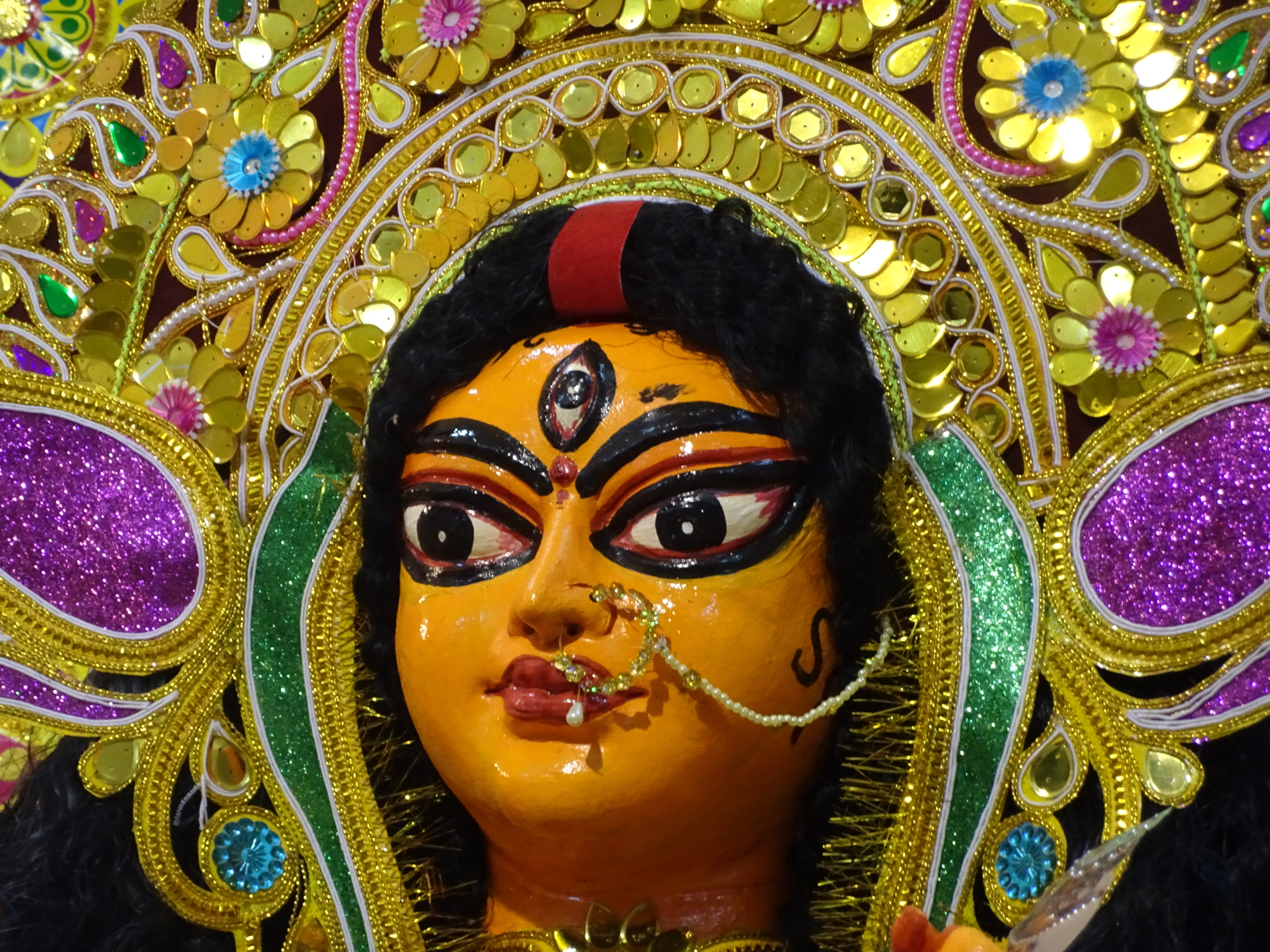

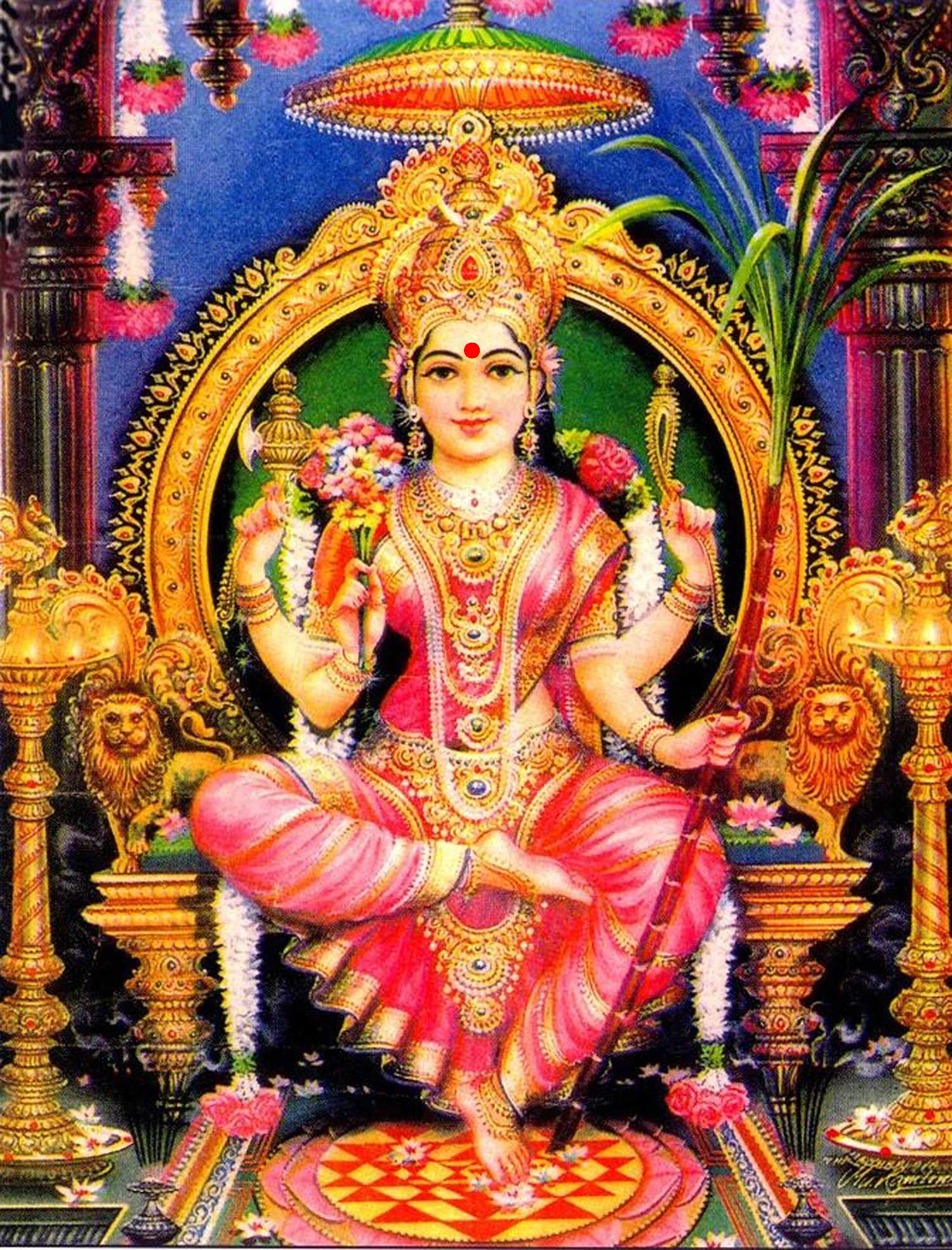
 21BanyanTree Life Coaching
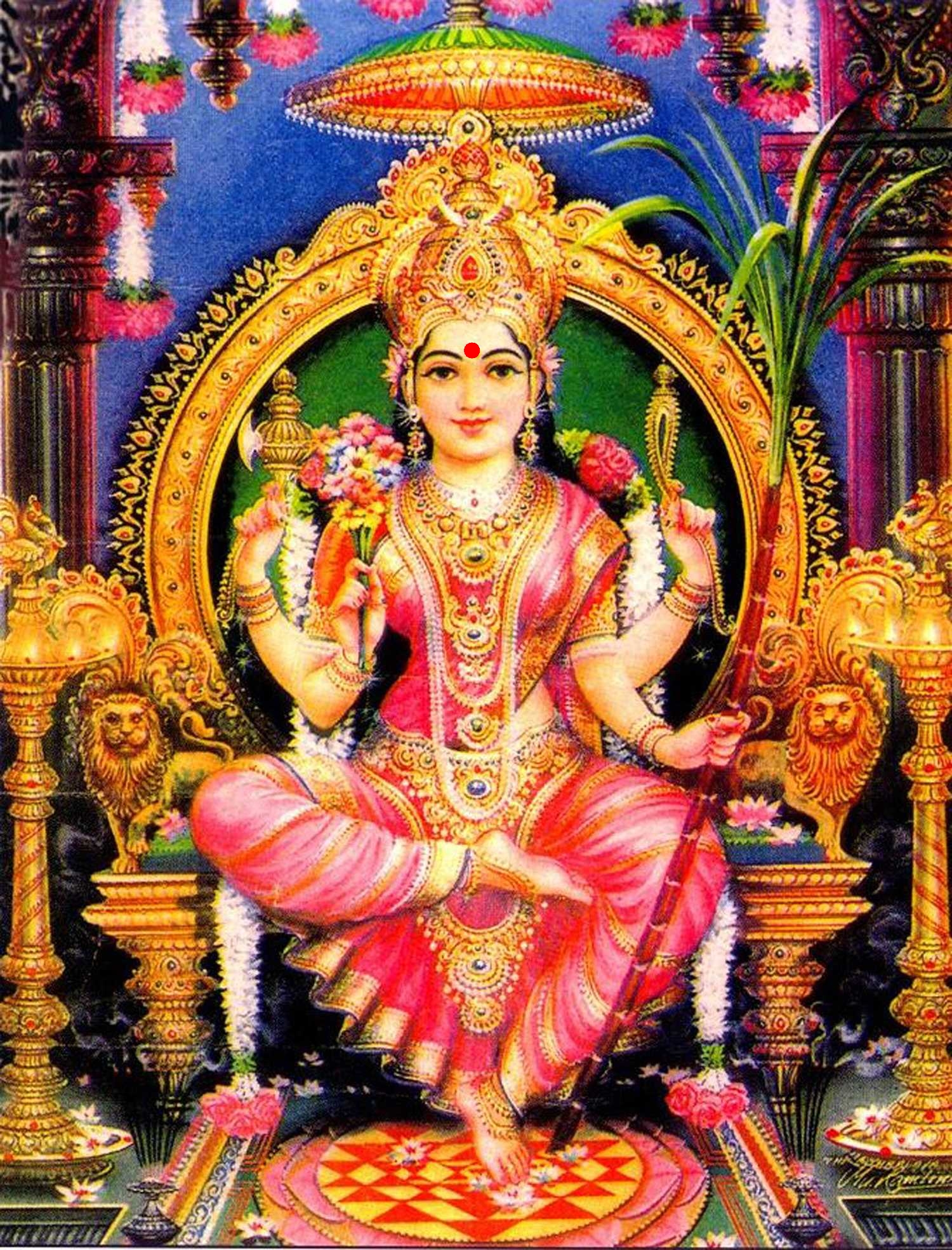
You must be logged in to post a comment.